The Original Black African Arabs of Arabia (Part 2) — Ogu Eji-Ofo Annu

The Original Black Arabs of Arabia - Part 2

By

Ogu Eji-Ofo Annu
 
Arabia the Daughter of Kush

The classical Greek and Roman writers commonly accepted the division of Arabia into Deserta (desert), Felix (happy), and Petraea (stony).  Not much is known today about the exact configuration of those divisions.  Later day Islamic Arabic geographers know nothing of this division, and this is not surprising since many of those later day Arabs are actually immigrants that later acculturated and assimilated into the culture of the original Black Arabs.

Arab geographers of the Islamic period divided Arabia generally into five provinces: The first is Yemen, embracing the whole south of the peninsula and including Hadramaut, Mahra, Oman, Shehr, and Nejran. The second is Hijaz, on the west coast and including Mecca and Medina, the two famous centres of Islam. The third is Tehama, along the same coast between Yemen and Hijaz. The fourth is Nejd, which includes most of the central table-land, and the fifth is Yamama, extending all the wide way between Yemen and Nejd. This division is also inadequate, for it omits the greater part of North and East Arabia.

A more recent division of Arabia, according to politico-geographical principles, is into seven provinces: Hijaz, Yemen, Hadramaut, Oman, Hasa, Irak, and Nejd.  It has always been the assertion of experts that certain tribes that lived on the coast of Yemen and on the coast of Ethiopia and Eriteria were almost identical.  The linkages between Ethiopia Kush and Arabia must be considered in the context of any discourse on Arab people, or more precisely stated the Black Africans of Arabia. 

Ethiopia-Kush
 
As stated in the preceding paragraph, the key to understanding the origin and culture of the Arabs is through African Kushitic Ethiopia.

Contacts between eastern Africa and Arabia have existed since the time immemorial.  Archeological evidence has demonstrated that Africans of the Caspian culture probably moved across the Strait of Bab El Mandel and implanted the same Caspian culture in Arabia on the other side of the strait.  See Leaky, L.S.B., Stone Age Africa pp 38-78. 

The Strait of Bab-El-Mandel, which separates Africa from Arabia, is quite narrow at some points averaging a couple of days journey on a sea raft or small canoe.  Communication and travel have consequently been possible since pre-historic times.

It will thus not be a surprising claim to the well informed that East African people (being the first aboriginals of the earth) have long settled in Arabia as the original inhabitants.  For instance, besides the Caspian culture, African people also founded the so-called Afro-Arabian Tihama cultural complex in the mid-2nd millennium. 

In addition to the coastal site of Adulis in Eritrea and sites farther inland in Eritrea, Ethiopia, and Sudan, vestiges of the Tihama cultural complex are represented on the Saudi coastal plains and the western and southern coasts of Yemen. (Fattovich 1997).

Moreover, African settlements were further stimulated by the growth of the Egyptian state from the 4th millennium onward, with more extensive migration of African population in Arabia around the 3rd and 2nd millennia B.C.   Semitic speaking settlers from Ethiopia-Kush settled in Arabia built complex cultures and civilizations of which the later Assyrians, Greeks, Romans and Jews would document for coming generations.  See Josephus Book 1.

Long before Yemen had become a politically articulated entity, the Ethiopian-Axumites had built many powerful states along the coast of Red Sea and the hilly countries of Ethiopia such as ancient Adulis, Coloe, Yeha Tokanda, and the so called Ethio-Sabean state of Daamat (circa 800-600 B.C.) etc.  Ethiopia-Axum, the ancient dominant power in the region, gradually incorporated the African-Yemenites into its political sway. 

By 12th century B.C. Southern Arabia fell under the complete control of the Ethiopian-Axumites through their long domination of the Red Sea trade routes.  The first kingdom built by the Ethiopian-Axumites in Arabia was Saba just across the straits in Yemen in 800 B.C.  See  Ephraim Isaac and Cain Felder, “Reflections on the Origins of the Ethiopian Civilization”, Eight International Conference of Ethiopian Studies, November 1984.  Successive civilisations of Mineans, Sabaeans and Himyarites interacted closely with their counterparts in Ethiopia. 

For a while the Ethiopian-Kushitic Arabs focussed their energies on the Yemeni side of the coast in states like Saba and Daamat.  Products were shipped into Yemen from Ethiopia and exported all over the world through the Red Sea.

Following the decline of Saba and Daamat, the international trade hub moved to the kingdom of Axum on the opposite side of the Red Sea coast.  From its seaports such as Adulis, Ethiopian-Kushites, Axum’s trade network extended from Egypt as far as India.

Axum survived for more than 2500 years as a great state dominating the Red Sea regions although western historians would grudgingly concede 800 years.  It occupied and ruled southern Arabia for part of this period.  Utilitarian Aksumite pottery has been found in large quantities in deposits from the 5th and 6th centuries in the Yemen Hadramawt, suggesting that there may have been substantial immigration during that period.  Axumites descended groups such as the Habashahs, still live in southern Yemen today fully cognizant of their African origins and connections.
 

Indeed, interaction between Yemen and Ethiopia in ancient times is sometimes compared with the historical relationship between Europe and America, with the Red Sea as substitute for the Atlantic Ocean.

THE BEJA PEOPLE: HABITAT AND HISTORY
 
Another important group of Black African groups who contributed genetically, and culturally to the formation of the Arabs are the Bejas otherwise called the Blemmyes.  It appears that the Blemmyes as encountered in classical literature provided the foundation for the ethnic group  known today as Bedouins.
The indigenous Beja people are nomads who have inhabited the semi-desert area in the Red Sea coast of Sudan and the hilly country behind it for thousands of years. The ancient Egyptians referred to them as the people of Buka or Medju (Medjay), the Romans dubbed them Blemmyes and in the Odessa they were described as Erembes.  They are a Kushitic-Khemitic people who spoke a mixed dialect of semitic and Cushitic language.  They identify themselves today as the most original and ancient of the Arab tribes.

Kemitic Pharaohs called them Absha, meaning ‘the desert dwellers’ – that is, the Bedouins in Arabic language - and Ramses II called them Beja, purporting fighters’.  Thus one can reasonably see the Bejas as fulfilling the Arab Bedouin archetype of the fearsome, nomadic owners of the Sahara, highly temperamental but compassionate.  Throughout history, they have been regarded as very efficient fighting machines. It is important to note that besides the Nubians, it is well documented that the Beja were employed in the Egyptian army and were credited for their courage and fortitude during the expulsion of the Hyksos from Egypt.

The Roman Historian Ammianus Marcellinus inspite of his odious ethno-centrism provides us more clues on the racial and ethnic identity of the earliest Arabs.  In his book The Roman History, Book XIV.iv.1-7. (380 A.D.)) the Saracens a named that was used to describe the Arabs in both ancient and modern times (stems most likely from the Arabic Sarqiyyun, meaning ‘easterners’)  were described as the Blemmys tribes who lived along the banks of the Nile beyond the cataracts.  According to Ammianus Marcellinus:

“Book XIV.4:
At this time also the Saracens, a race whom it is never desirable to have either for friends or enemies, ranging up and down the country, if ever they found anything, plundered it in a moment, like rapacious hawks who, if from on high they behold any prey, carry it off with a rapid swoop, or, if they fail in their attempt, do not tarry. And although, in recounting the career of the Prince Marcus, and once or twice subsequently, I remember having discussed the manners of this people, nevertheless I will now briefly enumerate a few more particulars concerning them.

Among these tribes, whose primary origin is derived from the cataracts of the Nile and the borders of the Blemmyae, all the men are warriors of equal rank; half naked, clad in colored cloaks down to the waist, overrunning different countries, with the aid of swift and active horses and speedy camels, alike in times of peace and war. Nor does any member of their tribe ever take plow in hand or cultivate a tree, or seek food by the tillage of the land; but they are perpetually wandering over various and extensive districts, having no home, no fixed abode or laws; nor can they endure to remain long in the same climate, no one district or country pleasing them for a continuance.

Their life is one continued wandering; their wives are hired, on special covenant, for a fixed time; and that there may be some appearance of marriage in the business, the intended wife, under the name of a dowry, offers a spear and a tent to her husband, with a right to quit him after a fixed day, if she should choose to do so. And it is inconceivable with what eagerness the individuals of both sexes give themselves up to matrimonial pleasures.

But as long as they live they wander about with such extensive and perpetual migrations, that the woman is married in one place, brings forth her children in another, and rears them at a distance from either place, no opportunity of remaining quiet being ever granted to her. They all live on venison, and are further supported on a great abundance of milk, and on many kinds of herbs, and on whatever birds they can catch by fowling. And we have seen a great many of them wholly ignorant of the use of either corn or wine.”

The Black African Bejas/Saracens also called the Blemmys gave to the Arabs of today (blacks and pales) the knowledge to live in the Sahara as well as the most basic cultural elements that define the Bedouin culture including nomadic identity, marital culture and martial arts.  For instance, the war-like Blemmyes (Beja) had normally fought with curiously shaped bows, and it was from them that the tribes of Hijaz and Yemen (in Arabia) – and the other Arab tribes – adopted the use of the bow.  Historically, the Beja ruled the vast territory of theirs (laying between Northern Nigeria and Sudan) in five kingdoms – namely, the Naqis, Baqlin (Taflin), Bazin, Jarin and Qat’a (Qit’a, also perhaps Qas’a).
Arabia Petra

Arabia Petra spread between African Kushitic Egypt and Mesopotamia (another African kushitic area in the ancient times) (Josephus).  It was originally settled by an early branch of the Cushitic Ethiopian people who spoke a proto-type semitic dialect. 

The Beja’s known as the ancient Blemmyes one of the earliest known nomadic tribes to dwell in the deserts of Africa and Arabia probably provided the founding population of Arabia Petra. 

Other sections of the African population from the early Caspian culture and other culture complex centered on Ethiopia Axum and Ethiopia Kush may have equally contributed to the early settlement of Arabia Petra.  

Some of these early African Black Arabs crossed the Red Sea whilst others migrated overland through the Nile valley into Arabia.  Arabia Petrea thus became an early blending pot of African cultures.  Due to this cultural ferment many nomads soon abandoned their wandering lives to establish sophisticated towns and cities together with the more sedentary population.  These melange later became known as the Nabateans and their capital was Petra.  (Drussilla Houstons)  See also http://nabataea.net/arabia.html.

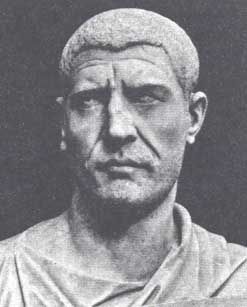
During the Roman period, the word Arab was a synonymy for Nabatean and vice versa.  When the Romans incorporated Nabatea into their Empire, it was officially designated as the Province of Arabia.  Numerous sculptures found in Arabia Petra clearly depict its population as African through their physical features.  One classical example is that of Emperor Philip of Arabia one of the later Emperors of Rome, who was indigenous to Arabia Petra.  His sculptures demonstrate that physically speaking, Emperor Philip of Arabia was a Black man of African descent.

Arabia Felix

Arabia Felix laid further south of Petra.  Arabia Felix was bounded by the Shiraz region of the Persian Gulf, the Eritrean or Red sea (Africa) as well as the Indian Ocean.  This country was rich in spices and in it was situated the famous cities of Mecca and Medina.

Here was the country of the Yemenis, the Habashas, the Sabas, the Hadramautians and the Mineans.  All these were sections of the Ethiopian-Axumite tribes similar to the Amharas, the Oromos and the Tigriyeans, who had expanded the ancient lucrative spice trade to Arabia. 

It should be noted that in addition to coffee, Ethiopia is the original homeland of incenses such as frankincense, myrrh, and spices like cinnamon.  The traditional African planters of these cash crops and the African maritime operators of this most lucrative of ancient trades extended their operations from Ethiopia across the straits of Bab-el-Mandel to take advantage of the fertile land and the natural habours of Arabia Felix, which subsequently became export hubs of the ancient trade.  (See Strabo,geography Book XVI.iv.19).  Produce was shipped routinely from the highlands of Ethiopia into Ethiopian owned- Arabia Felix for exports to the rest of the world.

Given the historical, genetic, physical and geographical proximity between Ethiopia and Arabia Felix and the similarity of the cultural expression of both land, it is not a wonder why the ancient Greek writers swore that the Ethiopians ruled the whole of Arabia.  It was clear to the sophisticated Greeks and the worldly Romans that Black Africans settled and developed this portion of Arabia!
 
Arabia Deserta

Arabia Deserta was originally people by the Bejas and kindred groups from Africa.  These are the original owners of the Sahara and its extension known as the Arabia Desert.  The Bejas as we have seen from preceeding paragraphs were the first to be called Bedouins due to their nomadic culture and their preference for Desert habitats.

In the beginning of Holocene period, a group of landless, barbarian, starving, pale-skinned Central Asian refugees now known as the pale-skin Arabs (i.e. the so-called Semites) began living side by side with the nomadic African Cushitic Bejas who owned the entire Sahara desert between the Nile and the Arabian peninsula.  Over the course of time these two peoples have intermingled culturally and genetically that there is barely any pale skin (Arabized) Arabs alive today that does not carry extensive Africa genes in his blood.  The descendants of this intermingling are the so-called modern Semitic Arabs (more precisely known as the Arabized Arabs) who trace their roots through Abraham.

The Central Asian barbarians did not develop any states, high culture or language in Arabia.  They were destitues, mostly ignorant, unread and illiterate.  The Koran takes great pain to dissociate this group from the high cultural attainment of ancient Arabia.  It is clearly stated that until the advent of the Islamic Prophet Muhammed, these so-called Semites lived in a state of perpetual brutality, savagery, warfare and robbery.  The Koran also takes pain to identify the original Black Arabs who had lived in Ad, Thamud, Imru etc, as the originators and builders of Arab civilization and culture.

These Arabized Arabs have sublimated stories of their origin in the legend of Abraham, which narrates of his journey from somewhere proximate to central Asia into the Black African territory of Arabia.  He was said to have married a Black Egyptian-born wife, Hagar/Hajir, and their son was named, Ishmael/Isma’il.  In this legend one immediately becomes aware of the central Asian origin of its heros and the resultant miscegenation which gave rise to the Arabised Arabs.

These so-called descendants of Abraham (actually mix breed from Black African Bejas and pale central Asian-stanis like the Turkmenistanis) settled in Mecca which was then under the overlordship of the Kushitic-Ethiopic owners of Arabia-Felix.  This category of Arabs normally called themselves ‘Adnaniyun – that is, after one of their great tribal ancestors Adnan. 
Despite the mythical origin of this peculiar historical source, it is clear that conscious effort has been made by Arabized Arabs to associate their tribes to African Royal pedigree. 

Since it is generally known that Kushitic citizenship was matrilineal, and only children born by Kemitic Kushite mothers could aspire to be Kings in Egypt and Ethiopia, it does not take a lot of imagination to understand the role of the black Egyptian (Kemitic Kushite) Hagar in the Abraham story.  The Arabized Arabs actually claim a Black African historical and archetypal mother!  No wonder “Aswad” (Black) is such an attractive concept in Arabic language.

December 9,2006

To be continued

43 Responses to “The Original Black African Arabs of Arabia (Part 2) — Ogu Eji-Ofo Annu”

  1. Dana Marniche Says:

    The Blemmyes were thought to have been just one of the Bedja tribes. Bedja or Medjayu was a more general name for the Afro-Semitic Cushitic people living on the African side of the Eritraean Sea. There were also the Adiabari, Megabari and other Barbari. The Anag’il of the Bedja are now called Danakil. Abraham’s people were very likely similar to the modern dark-skinned Mash’ai of Oman known to Josephus as Mash son of Aram. The Aramaeans of ancient times were the Amorites or Ammuru. Thus, according to the Biblical book Ezekiel - Israel’s mother was a Hittite and father was an Amorite. Both were early Canaanite peoples. Ham Shem and Japhet were all the same people 3500 years ago. The Syro-Aramaeans in the tomb of king Tut and Phoenicians in the temple art of the Egyptians show that they had the same pigment as the people of the ancient Egyptians, Puntites and some of the peoples of Nubia - A dark brown color with a copper or brick red caste.

  2. Ali Sharif Mandela Says:

    If Prophet Abraham(sas)was a pale skinned Central Asian Semite
    and his wife Haga/Hajir was a Black kemitic Kushite Eyptian African woman,then was Prophet Muhammad’s(sas)skin color pale or
    a dark brown color with a copper or brick red caste? It appears that most Arabs was of dark hue before the advent of european invaders,conquers,colonizers,
    rapist or intermarriage added to the skin color. Prophet Muhammad(sas)is described as having pale skin or white. Looking at his lineage,would it be proper to say he is white,black or of mixed heritage? Also,if there was no invasion,conquest or
    colonization of Arabia,and no intermarriage or rape by Europeans(Turks or Persians),
    then how could the Prophet or anyone else be born of white skin color at that period of time in Arabia? Please explain!

  3. Muhayyuddiyn 'Ali Dhuw-Al-Fiqaar Says:

    Thank you for this observation.Haajar(Hagar) was Egyptian Matron and Ibraahim(Abraham) was a Kushite Patron from Khaldaiyy Uwr of Ancient Babylon a Kushite Colony.They begat Ishmaa-El.Ishmaa-El married another Egyptian Matron woman named Fatima Ar-Ri’lah,they begat Twelve Princes the second whose name was Qeydaar(Kedar) this Arabic /Hebrew name means Powerfuly Dark Skinned man.Qeydaar(Kedar) married Fakhira a Matron Woman from The Qahtaanites(Joktan son of Kush)another African person.So in Fact Muhammad(saws) was Fully African in the North East Arabian Quarter of Afriqa.He was not white.The Arabic Term Sayyid which is the title of all of Abraaham’s and Muhammad’s Children;It means Noble.It comes from the Arabic Root word Sawwad(Black).If we were to say
    “Huwa Ya-suwd min-hu”. Translated as;
    “He is Blacker than him”. Literaly means;
    “He is more Majestic than him”.
    So here we can see that the Arabian term for “black” is a Noble Term.Today at the Kaaba, There you can see the Kiwa(cover)is Black. Hajr-I-Aswaad The Black Stone.Hadith al-Kisa the Cloak of Muhammad over his Family,Ali ,Fatima,Hasan,and Hussaiyn was Black and today a Sheiykh or a Ayaatullah Shi’ite from the descendants(sayyid=Sawwad) of Muhammad wear Black Turbans.Then we have the Term Sudan=Land of Two Blacks(East bank of the Red Sea and West Bank of The Red Sea)Africa and Arabia is one Land two different sides of the Red Sea.I know because I’am a Sayyid(Noble) who is Ya-Suwd(Majestic)who is Sawwad(Black)from the Sudan(lands of the Two Blacks=Abraham and Hagar).

    Salawat

  4. TEE Says:

    Why isn’t this taught??

  5. mahmoud onursemra Says:

    i want yous to talk about bedja alot the information i see is not good enough to get intersted at the moment its ok but not to good

  6. Rasheed Hakeem Says:

    I would like some information on the prophet Mohammed. I know he came from a black line. Please write back and let me know

  7. Mohammad Says:

    Muhayyuddiyn ‘Ali Dhuw-Al-Fiqaar,

    You are mis-informed.

    1. The Arabic word “sayyed” originates from the old-Arabic word “yassod” which literally means “to practice authority over another”. Therefore a “sayyed” is a term given to someone who practises religious authority over his people. Sayyed does NOT originate from the word “black”, it originates from the term “to practice authority over another”. Please let us not distort the truth, Arabic is a complicated language that is until today disputed over the Koran. The last thing we want to do is debate the skin colour of prophet Mohammad peace be upon him.

    2. When the Arabs invaded Africa and Sudan in particular, they saw that the native Sudanese people were very black compared to them. So they named the land “Sudan”, which means “land of the Black people”. So this could only mean one thing, that the Arab invaders who spread Islam into Africa were lighter-skinned than the Sudanese people, which is why they named Sudan as “land of the black people”.

    3. The black stone of the Ka’aba was originally white, as stated by a popular Islamic hadeeth. The colour became darker as more sins were committed on this planet.

    4. Prophet Abraham was an Iraqi, i.e. Middle Eastern. He married Sarah and had two children overall, one of which is Isaac who is known as the ancestor of modern-day Jews, Hebrews and Israelites in general. His second child was a son of Hagar, a housemaid who worked for him. From Hagar came his second son, Ismael, the modern-day ancestor of the Arab peoples. Hagar, contrary to common misconception, was neither black or white. She was brown of colour.

    5. Qeydar, another Arabic name, originates from the word “Qeyd” or “Qeyada” which means “to drive” or “to thrust”. It is a word given to describe someone POWERFUL, regardless of his skin colour. So again, I ask you not to distort the truth.

    6. Just because a prophet’s cloak was black doesnt mean his skin colour was black. For goodness sakes, my skin colour isnt black. Does that mean I shouldnt wear a black cloth? This argument is weak and at the same time stupid. A black cloak is merely a black cloak, it has no significance in who or what a person looks like. Ill also have you know that the prophet’s favourite colour was white. Ill also have you know that when Muslims fought as an army they wore white. Their flag was white. White represented simplicity, purity and good for mankind according to Islam. And also according to the prophet, a black cat or black dog is mostly infested with evil or jinn than a dog or cat of another fur colour. So lets get straight to the point, whether Arabs appreciated the black colour or not is merely pathetic and sick joke.

    7. The prophet’s actual colour or representation is green, just for your information.

  8. Jahdey Says:

    Muha-madder states:
    The prophet’s actual colour … is green, just for your information.

    JAHDEY SPEAKS: Pathetic wretch. There are no green human beings on earth.

    Accordiing to Al-Jahiz: The Prophet’s grandfather Abu-Muttalib had ten sons and they were black as the night and magnificient.

    Jecanites like your grandfather may be green ..LOL..but the Prophet was a black man.

    Jahdey

  9. Mohammad Says:

    ^You are a liar because prophet Mohammad wasnt a black man, and this isnt something that we should discuss to begin with; as Muslims we all know that skin tone means absolutely nothing in this world and in the hereafter, however, it is equally appaling to make lies about people’s appearances. Everyone knows that Prophet Mohammad is a descendant of Ibrahim, which means that Prophet Mohammad is not an “original” Arab or “Qahtanite”. So you are only contradicting yourself, you fool. First, you claimed that original Arabs are blacks. But as we all know, original Arabs no longer exist because they were wicked people and god sent his wrath upon them and destroyed them (Ad and Thamud). And then you accused the prophet of being black but we all know that prophet Mohammad was not an original Arab, he was a northern Arab, i.e. “An arabized arab who descends from prophet Ibrahim”. Furthermore, Ibrahim is a semite and semites were bronze/copper people; they were not black as history suggests.

    The prophet’s official colour was green, and green represented Islam, the prophet and his family. Just because someone wears green does not mean his skin colour is green, you are an idiot. If the prophet wore a black cloak, it doesnt necessarily mean he’s black. Go google “tuxedo”. Tuxedo is a black suit, but does it mean that only black people wear black suits? You are pathetic and your statements are more pathetic.

    Sayyed derives from “yasood”… Yasood derives from “sad”, NOT “sawad”. Sad means “position”. So a sayyed is a man of position, you obviously need a lesson in Arabic.

    Also, provide me the source of mentioning that the prophet’s grandfather was as “black as the night”; its utter crap. Everybody knows that the prophet and his people of Quraish were “somor”, which derives from the word “asmar”, which transliterally means “TAN” or “BRONZE”. Unless you think tan is black, then you are very foolish. Perhaps his skin colour was darker than white Europeans, but it is certainly much much much lighter than the African peoples. It goes to show you that you dont know what he’s basing his relevance on. Relative to a European Im darker than him, but relative to a black African Im lighter than him. If you cannot comprehend this then truly you are foolish.

  10. Jahdey Says:

    Mo-madder

    My friend you are back. Fine. Read the article linked beneath as well as the sources..

    Black Arabs Pt. 4..
    http://www.africaresource.com/rasta/sesostris-the-great-the-egyptian-hercules/the-original-black-arabs-of-arabia-part-4-the-black-stone-the-black-tribe-of-koreysh-black-prophet-mohammed/

  11. Mohammad Says:

    Still there are no sources, you cant source your own website thats damn stupid. My explanation is right above^^^. You may wish to believe in truth or believe in your twisted ideology of everything being linked to “black”. Whatever floats your upside down boat.

  12. Jahdey Says:

    Mo-mad

    Read and expand your mind:

    Medieval Sourcebook:
    Abû Ûthmân al-Jâhiz:
    From The Essays, c. 860 CE

    ——————————————————————————–

    On the Zanj [ "Black Africans"]

    Everybody agrees that there is no people on earth in whom generosity is as universally well developed as the Zanj. These people have a natural talent for dancing to the rhythm of the tambourine, without needing to learn it. There are no better singers anywhere in the world, no people more polished and eloquent, and no people less given to insulting language. No other nation can surpass them in bodily strength and physical toughness. One of them will lift huge blocks and carry heavy loads that would be beyond the strength of most Bedouins or members of other races. They are courageous, energetic, and generous, which are the virtues of nobility, and also good-tempered and with little propensity to evil. They are always cheerful, smiling, and devoid of malice, which is a sign of noble character.

    The Zanj say to the Arabs: You are so ignorant that during the jahiliyya you regarded us as your equals when it came to marrying Arab women, but with the advent of the justice of Islam you decided this practice was bad. Yet the desert is full of Zanj married to Arab wives, and they have been princes and kings and have safeguarded your rights and sheltered you against your enemies.

    The Zanj say that God did not make them black in order to disfigure them; rather it is their environment that made them so. The best evidence of this is that there are black tribes among the Arabs, such as the Banu Sulaim bin Mansur, and that all the peoples settled in the Harra, besides the Banu Sulaim are black. These tribes take slaves from among the Ashban to mind their flocks and for irrigation work, manual labor, and domestic service, and their wives from among the Byzantines; and yet it takes less than three generations for the Harra to give them all the complexion of the Banu Sulaim.

    This Harra is such that the gazelles, ostriches, insects, wolves, foxes, sheep, asses, horses and birds that live there are all black. White and black are the results of environment, the natural properties of water and soil, distance from the sun, and intensity of heat. There is no question of metamorphosis, or of punishment, disfigurement or favor meted out by Allah. Besides, the land of the Banu Sulaim has much in common with the land of the Turks, where the camels, beasts of burden, and everything belonging to these people is similar in appearance: everything of theirs has a Turkish look.

    Source.

    Scanned by: J. S. Arkenberg, Dept. of History, Cal. State Fullerton. Prof. Arkenberg has modernized the text.

    http://www.fordham.edu/halsall/source/860jahiz.html

  13. Jahdey Says:

    Moamad squeaks:

    …..because prophet Mohammad wasnt a black man,….
    ….You may wish to believe in truth or believe in your twisted ideology of everything being linked to “black”. Whatever floats your upside down boat.

    JAHDEY SPEAKS:

    More teachings for the young mind of doubters like Moamo:

    “The Ethiopians, the Berbers, the Copts, the Nubians, the Zaghawa, the Moors, the people of Sind, the Hindus, the Qamar, the Dabila, the Chinese, and those beyond them…the islands in the seas…are full of blacks…up to Hindustan and China.”
    –Al-Jahiz, Book of the Glory of the Blacks Over the Whites

    Al-Jahiz (in Arabic الجاحظ) (real name Abu Uthman Amr ibn Bahr al-Kinani al-Fuqaimi al-Basri) (born in Basra, c. 781 – December 868 or January 869) was a famous Arab scholar, believed to have been an Afro-Arab of East African descent.[4][5] He was an Arabic prose writer and author of works on Arabic literature, biology, zoology, history, early Islamic philosophy, Islamic psychology, Mu’tazili theology, and politico-religious polemics.

    http://en.wikipedia.org/wiki/Al-Jahiz

    Al-Jahiz was the author of the Book of the Glory of the Blacks Over the Whites–a special essay in which the global history of African people and the subject of Blackness itself was discussed. During the 1980s, through the efforts of Mr. William Preston, the work was finally translated and published in English. It was long overdue.

    The Book of the Glory of the Blacks Over the Whites is a remarkable document. It includes penetrating commentaries on great African heroes such as Antarah the Lion, Lokman–the celebrated sage of the East–and the African ancestry of the Prophet Muhammad himself.

    According to Al-Jahiz, Abd al-Muttalib, the guardian of the sacred Kaaba, “fathered ten Lords, Black as the night and magnificent.” One of these men was Abdallah, the father of the Prophet Muhammad.

    http://www.cwo.com/~lucumi/jahiz.html

  14. Mohammad Says:

    You see now youre beginning to contradict yourself because now you are admitting that black Africans invaded Southern Arabia meaning that they are not native to the Arabian peninsula. According to your idol, Jahiz, he said that Arabs and blacks used to intermarry before Islam. So according to your idol, Arabs were never black to begin with. I wouldnt be surprised if a black scholar claimed that prophet Mohammad was black, I guess it runs in the genetic lineage. Prophet Mohammad is a pure tribesman of the Hashemite clan, which belonged to the people of Quraish. Quraish were descendants of prophet Ismail who came from Northern Arabia. Ismail was son to Ibarahim, who was a semite who lived in the north. So according to logic, prophet Mohammad is not black because his lineage is traced back north to the people of Ibrahim. Theres no evidence which traces prophet Mohammad to southerners, not one bit.

    Also, dont forget that Jahiz was a satirist. His books were all dark humor, so dont take his words for granted. The only scientific book you can base on Jahiz was what he said about animals and human beings having different skin colours. We all know that this is 100% true. Adam was one colour, but Adam’s children became whites, blacks, browns, etc. This variation of skin color is environmental. People who live near the equator are said to be darker, which is why historian and genealogists concluded that people who live in North Africa are actually tan compared to people who live in central Africa, basically because central Africa is tropical and equatorial whereas North Africa is a desert and far from the equator. This is another explanation why Europeans are whiter than everyone else, because Europe is the furthest away from the equator than the Middle East or North Africa.

    Sure black people did go to many places around the world, so what? Arabs traveled, white people spread around the world, who gives? Its no big deal and you shouldnt glorify such a stupid thing, you almost make it sound as though blacks are the only people who migrated around the world (whats not mentioned is most migrated due to slavery).

    As for the Himyarite kingdom, they were Arabs and they were invaded by black Ethiopians a few decades before Islam came out. The Abbisynians invaded Yemen and defeated the Arabs, we all know that, it is part of history. However you should also know that the Abbisynians were strategically fighting the war for the Romans because the Romans wanted a geographic foothold in Southern Arabia. Also, this didnt last for long. Eventually the Arabs revolted and kicked out the Abbisynians, this is why god mentioned in the Koran “the people of the ditch” explaining what Arabs did to Ethiopian prisoners after recapturing Yemen.

    As for your sources about black supriority over whites mentioned by Jahiz, its total and utter crap. First, your sources are all coming from pan-black and black-nationalist websites. Also, Im questioning the validity of your sources since most come from discredited websites. Infact, even the source itself is discredited because it sparks the very source of black racism against peoples of other races. If Jahiz really wrote this then hes such a pure dumbass, but I doubt he wrote these things. Im very sure many non-Arabs and blacks in particular have twisted history in order to make their racist agendas clear. If, howver, that Jahiz did write these things then it comes as no surprise since he was black and like all blacks he was the first to try stealing the glory of other people. Not only that, but the racism is very clear in these articles especially when talking about black men being physically stronger and all that utter bullshit. Im sure youll be offended if a white man was to say that blacks are the dumbest people on this planet. Just as Im also sure you still dont know what black looks like. According to each culture in this time zone, the definition of black skin colour frequently changes. How blacks are these blacks to begin with? Im sure Ethiopians are also racist amongst blacks who come from Central Africa since we all know that Ethiopans are lighter-skinned than Nigerians or Ghanians. So this whole source, article is rediculous in nature.

  15. Jahdey Says:

    JAHDEY SPEAKS:

    Maomoa,

    Now cite me one reliable reference from Islamic history or western history that disproves that the grandfather and father of Prophet Mohammed PBUH were not black as the night and magnificent.

    Thanks
    Jahdey

    According to Al-Jahiz, Abd al-Muttalib, the guardian of the sacred Kaaba, “fathered ten Lords, Black as the night and magnificent.” One of these men was Abdallah, the father of the Prophet Muhammad.

    Arab Yemenis/Himyarites: Black as the night and magnificient…

    http://www.hansrossel.com/fotos/fotografie/yemen/ye_s27.htm

    http://www.hansrossel.com/fotos/fotografie/yemen/ye_s25.htm

    http://www.hansrossel.com/fotos/fotografie/yemen/ye_s29.htm

    http://www.blackjadeworld.com/

    Arab Omanis: Black as the night and magnificient…

    http://www.omanet.om/english/culture/images/Fold15.JPG

    http://www.foodmuseum.com/images/siffomanicook.jpg

    http://www.collectorsprints.co.uk/images/stock/susan_crawford/omani_boy_on_his_arab.jpg

    Arab Iranians (from the Ethnic Arab provinces of Iran): Black as the night and magnificient

    Iranians from the Region of Bandar Abbas

    http://www.bbc.co.uk/radio3/worldmusic/onlocation/media/iran21.jpg

    http://pr.sv.net/aw/2005/March/english/images/Pagea3.jpg

    http://www.payvand.com/news/07/jun/Gonu-BandarAbbas1.jpg

    Baluchistan and Sistan Province: Black as the night and magnificient

    http://www.persiatours.com/woman_herds_baluch-iran.jpg

    Black iranian from Chabahar Province: Black as the night and magnificient

    http://www.moezsoft.com/images/chabahar.jpg

  16. Mohammad Says:

    ^You jackass, the prophet never wanted to expose his skin colour or his appearance to the people. Infact, its part of Islam to now speak about the prophet’s appearance. All we know that he was an Arab. Not black, not white, not yellow, he was an ARAB. You cant say “black Arab” or “white Arab”, theres no such thing. Theres only “Arab”, i.e. someone who embraced the Arabic language, culture and/or can trace his roots back to the Arabian peninsula. Thats the defintion of an arab. As for prophet Mohammad, I bet you cannot find a single picture of him on the internet or a single authentic referance to his appearance and thats mainly because prophet Mohammad never wanted future generations to know what he looks like. Skin colour did not matter to him and should not matter to you. You are a complete and utter asshole who is downright racist and pan-black nationalist. Its so obvious, its as clear as daylight.

    And are you calling Himyarites blacks? I thought, and according to your sources, that Himyarites were Arabs who were invaded by black Ethiopians. So how can himyarites be black? Its so funny now that you think about it, your logic is so twisted that I fear you will never be open minded about this world. You can stick to your fantasies because real genuine people want to know the truth, they dont want to be associated to the likes of you who only thinks the universe revolves around black-skinned people.

  17. Mohammad Says:

    One last thing, dumbfuck. Theres no such thing as disproving an accusation. You accused the prophet of being black so its not upto me to prove he wasnt black. Its upto you to prove that prophet Mohammad wasnt an arab, and any person on this planet (even a monkey) knows that prophet Mohammad was an arab, NOT black.

  18. Jahdey Says:

    Moamat

    The fact that you have been reduced to sputtering rage demonstrates the limitation of your intelligence and absolute lack of grace with which you come. Having been reduced to tatters by 1200 years of authorities, demonstrating that not only were there Black Arab tribes, that the Prophet himself was a Black man, and that Jecanites like your ancestors were slaves and refugees.

    Moreover, despite having been invited to debunk our thesis with scholarly authority, Moamat, o wretched product of some cheap madrassa, begins to make abusive remarks.

    But you only abuse yourself, and present your frustration, ignorance, impotence, inadequacy, jealousy and the pretensions that have marked your entire life and your entire Jecanite tribes.

    Jecanite, you are too low in rank to raise your despicable barks at me.

    Go bark at your grandfathers, the wretched Jecanites who lied to you about Black Arabs, attempted to set you up as a gate keeper of lies and thieves.

    But the wretched in morality, the thieves, the jealous, whores, slavers, liers and pimps, like you and your Jecanite tribe, have a hot hot place reserved … in the HELL of fire…upon judgement!!!

    “The Ethiopians, the Berbers, the Copts, the Nubians, the Zaghawa, the Moors, the people of Sind, the Hindus, the Qamar, the Dabila, the Chinese, and those beyond them…the islands in the seas…are full of blacks…up to Hindustan and China.”

    –Al-Jahiz, Book of the Glory of the Blacks Over the Whites

    According to Al-Jahiz, Abd al-Muttalib, the guardian of the sacred Kaaba, “fathered ten Lords, Black as the night and magnificent.” One of these men was Abdallah, the father of the Prophet Muhammad.

    Arab Yemenis/Himyarites: Black as the night and magnificient…

    http://www.hansrossel.com/fotos/fotografie/yemen/ye_s27.htm

    http://www.hansrossel.com/fotos/fotografie/yemen/ye_s25.htm

    http://www.hansrossel.com/fotos/fotografie/yemen/ye_s29.htm

    http://www.blackjadeworld.com/

    Arab Omanis: Black as the night and magnificient…

    http://www.omanet.om/english/culture/images/Fold15.JPG

    http://www.foodmuseum.com/images/siffomanicook.jpg

    http://www.collectorsprints.co.uk/images/stock/susan_crawford/omani_boy_on_his_arab.jpg

    Arab Iranians (from the Ethnic Arab provinces of Iran): Black as the night and magnificient

    Iranians from the Region of Bandar Abbas

    http://www.bbc.co.uk/radio3/worldmusic/onlocation/media/iran21.jpg

    http://pr.sv.net/aw/2005/March/english/images/Pagea3.jpg

    http://www.payvand.com/news/07/jun/Gonu-BandarAbbas1.jpg

    Baluchistan and Sistan Province: Black as the night and magnificient

    http://www.persiatours.com/woman_herds_baluch-iran.jpg

    Black iranian from Chabahar Province: Black as the night and magnificient

    http://www.moezsoft.com/images/chabahar.jpg

  19. Mohammad Says:

    You continue to trust the source of a deranged man who was at one time sympathetic to the Zenj/Black people. Furthermore, you are not a muslim so dont even lie. You still havent provided me the source to your claims that the black Arabs were mentioned in the Quran. Infact, if you were smart, youd realise that the word “arab” was not even mentioned in the quran; not once, not ever. So your complete disregard to other human skin colours makes you look like a complete and utter black-nationalist racist fool. Black-nationalism has got to end, it is filthy and full of corruption. It tried stealing the achievements of other mankind’s civilizations, it plagiarized the history of non-black people and claimed it as its own, it contradicts itself by making itself look innocent against the atrocious “white racism against blackhood” yet it then shows its own side of racism against any group of individuals who werent black. I doubt the prophet ever wants to associate himself with racist blacks such as yourself. He was a man of divine messages and he was a man or moral character. He was universally acceptable everywhere because he did not turn himself into a superior figure. You, on the other hand, never achieved a single glory in your god damn history yet you think so highly of yourself and so superior of yourself. I wonder what you wouldve done had you actually achieved something; heaven forbid.

    According to your idiot, Al-Jahiz, the Abbasynians were black Ethiopians and they conquered Himyrate Yemen, which was dominated by white people. According to him, all the white princes of Himyrate Yemen were killed and the Abbasynians married the white virgin women of the Yemeni settlements. Go look closely at your own god damn sources. Your own sources say that Himyrate Yemenis were white and that their civilization was destroyed by the black Ethiopians whom invaded Southern Arabia.

    And yet you still ignorantly claim that Himyrate Yemenis are originally black.

    According to your own sources, the black Ethiopians tried destroying the Kaaba. But Allah knows best and allah destroyed the black Ethiopians, and they were fled from Yemen and went back to their stink holes in Ethiopia.

    Al Jahiz was angry at that time. The Abbasid Caliphate wasnt treating the Zenj nicely, so Al Jahiz (a Zinj himself) wanted to get back at them by writing stupid stuff about blacks being superior; it contradicted all his common beliefs, and it made him look like a fool. The Zenj were in Arabia due to slavery. Search for “zenj revolt” in google. Youll read real sources of blacks being used as slaves in Arabia during islam’s conquest. then afterwards, the blacks tried to revolt against the aggression. But their so-called “physical strength” was overcome by the strength of Allah, and they and their leader were destroyed.

  20. Jahdey Says:

    #

    JAHDEY SPEAKS:

    Maomoa,

    Now cite me one reliable reference from Islamic history or western history that disproves that the grandfather and father of Prophet Mohammed PBUH were not black as the night and magnificent. Also cite one source that tells you that Yemenis were pink-pale in colour and not dark brown.

    Thanks
    Jahdey

    According to Al-Jahiz, Abd al-Muttalib, the guardian of the sacred Kaaba, “fathered ten Lords, Black as the night and magnificent.” One of these men was Abdallah, the father of the Prophet Muhammad.

    Arab Yemenis/Himyarites: Black as the night and magnificient…

    http://www.hansrossel.com/foto…..ye_s27.htm

    http://www.hansrossel.com/foto…..ye_s25.htm

    http://www.hansrossel.com/foto…..ye_s29.htm

    http://www.blackjadeworld.com/

    Arab Omanis: Black as the night and magnificient…

    http://www.omanet.om/english/c…..Fold15.JPG

    http://www.foodmuseum.com/images/siffomanicook.jpg

    http://www.collectorsprints.co…..s_arab.jpg

    Arab Iranians (from the Ethnic Arab provinces of Iran): Black as the night and magnificient

    Iranians from the Region of Bandar Abbas

    http://www.bbc.co.uk/radio3/wo…..iran21.jpg

    http://pr.sv.net/aw/2005/March…..Pagea3.jpg

    http://www.payvand.com/news/07…..Abbas1.jpg

    Baluchistan and Sistan Province: Black as the night and magnificient

    http://www.persiatours.com/wom…..h-iran.jpg

    Black iranian from Chabahar Province: Black as the night and magnificient

    http://www.moezsoft.com/images/chabahar.jpg

  21. Kreole Says:

    I think that the problem is with racial classifications to begin with.

    I am of haitian descent, my mother is very dark and my father is a bit lighter, and i have reddish-brown skin like a lot of carribean people, Does that make me a member of the red race?

    I represent Africa and my ancestry is african, i don’t really aknowledge my european ancestry if i have any, not by racism but because i don’t think it’s significant…

    You people have to understand that arabs don’t have the same concept of race as we do in America, alot of them really judge “blackness” with the actual skin color of a person. If a person does not have a really dark skin tone, they will not consider him as “black”. I know because it happened to me several times.

    But i have the impression that they do have a tendency to change a persons race by is personnal appearance or status. If a light-skinned african-american is ugly and a thief, he is more likely to be considered black.

    And they do have a lack of respect for people who look typically african.

    So my point is that our racial classifications don’t make sense,
    There is no such thing as a “red race”, everywhere you will find people with reddish brown skin, you will find people with way darker skin and people with lighter skin, like in most territories occupied by africans.

    Even though i have reddish brown skin, doesn’t mean i am less African then someone with a darker complexion.

    And to all the people who are jealous of the Egyptian/Kush/Nubia
    civilisation, stop trying to change the ethnic make-up of the ancient Egyptians, they were Nilotes and their history belong to the nile valley people. The little amount of blood they got from the neighboring culturally inferior asiatic tribes was of no benefit to them. Let me remind you that the golden age of Egypt occured a thousand year before the first foreign invasion. And these invaders could not build a pyramid if it depended on their life!

    Even the images constantly portrayed in the media
    of “red” Egyptians, and i do believe that they do not feature the darker skinned Egyptians on purpose, are not enough to make them less african and i am the perfect example.

    Oh and one more thing… You cannot trust physical descriptions of prophets and/or Gods, because they are bound to be influenced by the person who writes them. Arabia was always occupied by different tribes who did not look similar at all and did not necessaraly mix with each, so saying that the arabs were black, light or bronze/copper is stupid. They were never an homogeneous group. So the real question is not how Mohammed looked like, but how did the people who described it did?

    And don’t give me that “all muslims are righteous crap” ok?
    Some muslims are among the most despicable and hypocritical people on the face of the earth!

  22. Mohammad Says:

    I sweat to god sometimes I think Im speaking to a spam bot since Jahdey repeats his question over and over again. Black as magnificent, yeah right lol.

  23. Dana Says:

    The following Arabian tribes are described as black or dark brown early Muslim and Christian writers at one time or another. Anyone who needs the bibliography on this. Let me know.

    The:
    1.Azd (also Zayyed or Zidon) ibn Kahtan (Joktan)
    2.Jews of Khaibar - Banu Nadzir (Nazarenes )
    3.Ka’b or Cha’b ibn Rabi’a of Iraq and Iran description 19th century (Chub of the Bible)
    4.Khazraj of Yathrib a branch of the Khuza’a or Khuzi’a
    5. Ghassan of Syria of the Azd
    6. Qays ibn Ailan descendants of Ishmael or Ismail.
    7. Qaran a tribe of the Murad (Maddhij)
    8. Eshban of the Bakr bin Wa’il(Shayban or Banu Shay of Medina a vassal tribe of Banu Sulaym bin Mansour)
    9.Kinana bin Khuzaima (the same as the Biblical Canaanites of the lowland around Mecca - now living in Jericho from whom came the Qureish)
    10.Al Muntafiq bin Uqayl ibn Ka’b of Iran (19th c.)
    11.Sulaym or Soleim ibn Mansour (Manasse’ir)see ibn Athir and Jahiz of the Nejd and Hejaz
    12. The tribes of Wad Dawasir in Al Yemama (the Dossariya)
    13. Banu Harb ibn Sa’d of the Hejaz
    14. Ateybe or Utayba of the Hejaz
    14. Mahra or Mahri ibn Kudha’a (Mahli ibn Kohut of the Bible)
    15. Yafi’i or Yafa’a of Yemen(Haiafa in Assyrian texts- Ephah son of Midian)
    16. Carra or Qarra of Dthufar Oman (remnants of the Azdite kingdom of Kinda and Carraean salt of Greek writers - Probably the same Gerrhaean salt traders and Carians of the Greeks)
    16. Malikh ancient Meluhha (Amlikhu or Amalekites traders of Misra lived in Meca and Medina and were descendants of Lud ad and Thamud according to tradition.(Mesurah was anciently the name of an Afro-Arabian tribe and Afro Arabian and place name - not Egypt!)they took over Egypt during the Hyksos period however.
    17. Shahara or Sheheri of Oman after whom came the name of Scheherezade (are from the Qahtan group)
    18. Banu Himyar (often called Kusi in Assyrian texts)
    19. Mash’ai (still living) in Yemen ancient Mash or Mashek son of Aram
    20 Bait Kathir of Yemen (Keturah ancestress of the Midianites, whom Josephus said settled in Africa now called Medja-ydin or Bedja, Afren and Japhren became the Afar and Afari of the Horn and Yemen, Ethiopia and Eritrea and the Banu Yifren (Ifuras Tuarek), Anoch or Henoch became Kel Inneg Tuarek and D’anakil Afar, etc.) Learn your history!!!

    These comprise the tribes of both “the pure Arabs” the Qahtan group Yarab (from Jerah,Yerah or Rekhem) and the adopted Arabs or Ishmaelites from Hagar “who is Keturah a people of the tribe of Misra which for the late Assyrians kings was a synonym for Meluhha.
    The “black” Arabians included the tribes in ancient Arabia descended from both the traditional Arab al Ariba or Arabs of the Arabs. They are still living as the Qahtan goup who today are mainly short, dark skinned people occupying Hejaz and southern Arabia claiming a remote descent from Africa.
    The taller muscular of “dark copper Arabs of Galla complexion” such as the Ka’ab ibn Rabi’a and other groups of north Arabian blacks were remnants of the Rabbean or Rapiqu and other Amorites of Mesopotamia who had conquered the ancient fertile crescent under such rulers as Numayr ibn Casit (Nimrod son of Kush) during the Hyksos period. The few remaining pure Rabbeans or Amorites living in central Arabia today are still gigantic in stature.
    Both the Meluhha and Kush who are in fact the so-called Semites and Hamites of Genesis also occupied North Africa (Nubia and Egypt) in ancient times as well and under the Hyksos many of the Meluhha(also called Ait or Adites) advanced to the Maghreb where they left the Tuarek and other original unmixed Beriberi. Slave trading and mixture with Turkish and Iranic mercernaries (as in the Yemen) since early Christian times is what has lightened the skin of both the Berbers and Arabians. It must be remembered that ancient Arabia was called India Minor and Ethiopia by the Greeks and Romans, while everything East of the Nile in Africa was sometimes called ‘Arabia”. All early texts refer to the Arabians as dark in color either dark greenish black, dark copper brown and black. There is no need to make them all into slaves, in fact, the earliest and most numerous slaves and concubines were fair-skinned people.
    Robertson uses the term “small chocolate colored” beings for the Harb of Hejaz as late as last century. These small Arab types e still occupy the Yemen, Oman and southern Hejaz. They are the indigens - among the last of the unmixed Arabs and are treated worse than slaves.

  24. Dana Says:

    Excuse me for all the grammatical errors in my post. That’s what happens when i rush to get my thoughts out. In the first sentence i meant to say…

    The following Arabian tribes are described as black or dark brown by early Muslim and Christian writers at one time or another…

  25. Jahdey Says:

    Dana

    Please provide sources for the elucidation of others.

    Thanks

    Jahdey

  26. Dana Says:

    I have enough bibliographical sources to start a web-site which I will be doing this summer devoted exclusively to descriptions of Afro-Asiatic by which I mean the original Arabian, Egyptian, Eritraean/Ethiopian, Dravidian and Sabara Kol populations and culture. I have been wowed by all of the information that is out there, especially on google books. Here are a few examples for now:

    Sir Richard Burton in his Personal Narrative of a Pilgrimage to El Madinah and Mecca published 1879 p. 172 describes the Harb as “small chocolate-colored beings stunted, and thin” having “bushy hair…straggling beards, vicious eyes frowning brows”. This statement to me is reminiscent of the “fierce faced” Shasu mentioned by the ancient Egptian texts. Before this on the same page he mentions the Harb as “the great Hejazi tribe that has kept his blood pure for the last 13th centuries”.
    An example of a living relatively unmixed tribe are the Kara (Qarra or Qara-Seva of Oman) who according to Bertram Thomas in 1929 were men of “brown skin” who “resemble the Bisharin tribe of the Nubian desert. The Bisharin are one of the main tribes of the Bedja people. This qutoe is from the year 1929 in the article “Among Some Unknown Tribes of South Arabia” in the Journal of the Royal Anthropological Institute Vol. 59, p. 100 It is one of several descriptions I’ve found of the Kara. They like other darker skinned Arabian tribes have a remote origin in Africa.
    For a fairly recent description of the Cha’ab or Ka’b Arabs (of Iraq)and their sub-tribe al Muntafiq ibn Uqayl see George Rawlinson’s, The Seven Great Monarchies of the Ancient World, Vol. 1. (07) Chaldea, Chapter III where he describes the Galla Ethiopians and “Abyssinans”, the Cha’b of Iraq and Montefik (Khuzestan, Iran) as “dark red brown”. however, there are quotes where the Ka’ab Arabs have been described as flat out “black”. They were also usually described as tall and muscular. Originally the Ka’b like other tribes of the Rabi’a groups had come from Central Arabia.
    I will mention one last quote by A.T. Wilson, from his book, The Persian Gulf, published in Oxford, 1928 about the Shihu tribe of the Persian Gulf, another small-sized people who are probably descendants of the Kasshites (of ancient Iran, Iraq and the Sealand) who also called their leaders Shihu.
    It runs as follows: “The Hamitic group is still represented along the coast of Oman, and the Shihu tribe, a small negrito race…survives in the Cape Musandam.
    All of the small or short statured Arabian groups remnants are not true “Negritos” or “pygmies” but very likely descendants of the small “gracile Mediterranean” types that were predominant in the ancient Near East and described by Sergi and others, ( although modern Western scholars liked to hide the fact that they looked like Africans).
    Hope this suffices for now. More is to come.

  27. Shakazulu Says:

    Dear Mohamet

    Why have you adopted such an aggressive tone in your responses? Could it be that you yourself habour racist attitudes?….looking at some of the thins you have said I have no doubt you are?

    You said that there are no descriptions of mohammed anywhere from muslims or non-muslims but the following link proves otherwise

    http://www.turntoislam.com/forum/showthread.php?t=15806

    Here you have the Prophet being described as ‘white’ according to your IDOL scholarse scholars who write Sharia Law edits which you all claim are divine!….. …..now if that is not a load of BS I don’t know what is…….The Prophet Prophet Muhammad, like Jesus and the other Biblical Prophets have been racialised by pale skinned scholars who have distofor their own gains

    in most Arabic lexicons, we read that black is simply the opposite of white.[13] Associated meanings include: Sawad, literally Blackness, meaning a group of palm, or other trees, so-called because of their lushness; the settled areas around a village or town; a great multitude of people (as-Sawad al’Adham); and great wealth.[14] The two staples of the desert Arab’s diet, dates and water, are referred to as the two black things (al-Aswadan).[15] It is interesting to note that whiteness (Bayad), in some of the contexts mentioned above has negative connotations. For example, as opposed to developed, settled areas referred to by blackness (Sawad), whiteness (Bayad) means deserted, void of life, a wasteland.[16]

    The word sayyid is from the same root as black or blackness S-W-D. That word means, depending on the context, Lord, master, honorable, virtuous, generous, forbearing, one who bears the abuse of his people, leader.[17] In this context, for a person to be called, literally, blacker (Aswadu) than someone else, would mean he is more majestic.[18] An exhaustive examination of this issue would be quite lengthy.

  28. Shakazulu Says:

    Mohamet

    You also said that the Quran does not mention the word ‘arab’ at all but again you are either a liar, ignorant or a hypocrite

    [9:101] “Among the Aarabs around you, there are hypocrites. Also, among the city dwellers, there are those who are accustomed to hypocrisy. You do not know them, but we know them. We will double the retribution for them, then they end up committed to a terrible retribution.”

    [9:97] “The Aarabs are the worst in disbelief and hypocrisy, and the most likely to ignore the laws that GOD has revealed to His messenger. GOD is Omniscient, Most Wise. ”

    [48:11] “The sedentary Aarabs who stay behind will say, “We have been preoccupied with our money and our families, so ask forgiveness for us!” They utter with their tongues what
    is not in their hearts. Say, “Who can protect you from GOD, if He willed any adversity for you, or if He willed any blessing for you?” GOD is fully Cognizant of everything you do. “

  29. Shakazulu Says:

    Here is one example of Mohamets
    otry…he said

    ”…Search for “zenj revolt” in google. Youll read real sources of blacks being used as slaves in Arabia during islam’s conquest. then afterwards, the blacks tried to revolt against the aggression. But their so-called “physical strength” was overcome by the strength of Allah, and they and their leader were destroyed……”

    now if this same bigot Mohamet would have did a liitle background research he would have realised that the Zinj were revolting because of the dispicable treatment they were recieving from the pale skinned ones….it was a revolution against oppression…but this bigot Mohamet claims that Allah was on the side of those who crushed the rebellion…which means inside his facist mind Allah supports tyranny and oppression!….what a HYPOCRITE YOU ARE!

  30. Shakazulu Says:

    This bigot Mohamet refers to al Jahiz as an Idol, deranged, Racist and when it suits him he then says that jahiz wrote a book ‘Kitab al Haywan’ ( the book of animals ) which was 100% true????….you see how these white supremacist swicth the goalposts whenever it suits them…..the same way the white Christians and the ignorant negroes who follow them will find it difficult to accept a black Jesus….the same for the pale skinned muhammadan and the ignorant negroes who follow them will find it difficult to accept that the Prophet Muhammad was a dark skinned arab of African descent…..bearing in mind that the so-called middle east today does not reflect the ancient population….neither does Egypt or South Africa

  31. Shakazulu Says:

    There is no need to make them all into slaves, in fact, the earliest and most numerous slaves and concubines were fair-skinned people.

    Well said Dana……another thing Black Arabs enslaved or kept other black arabs and other black people as slaves too….very much the same way the Ashanti or the Yuroba of West Africa kept slaves from other tribes as well as their own and even traded them to Europeans…..black arabs intermarried, traded, exchanged cultures, went to war and lived at peace with other Black peoples of Africa nad Arabia…these black arabs also kept pale skinned slaves….there was a lot of interbreeding which is why you see various shades of Brown in Arabia today….infact we Black people are really brown skinned people of various shades….from the darkest of the the dark Choclate to vanilla /caramel complexion…..however the muslim Historians who were for the most part pale skinned Persians….distorted the facts and presented it as though the blacks were the only slaves and whites were the ones who enslved them…….if you read any information about blacks in Islam…especially Bilal he is constantly referred to as Bilal the ex-slave…we are constantly reminded that he was an ex-slave…they try to give the impression that Bilal was the only negro around by consistently referring to his colour

  32. Dana Says:

    To Shakazulu, I am surprised that you even knew that many of the so called Arab commentators of the ancient world were in fact not Arabs at all at all but people from Iran, Central Asia, Turkey, Greece or other areas of the Near east that spoke Arabic. I have found that even some of the most important commentators of the Hadeeth that spoke of early arabian figures as dark brown and black in fact were in fact not Arabians, at all. Even the “Arab historians” that were born in the peninsula such as Wah ibn Munabbih who wrote derogatory things about blacks were supposedly descended from Iranian mercenaries. This is why he could write of the Qaran a tribe of the Mur’ad or Maddhij (Biblical Cheran brother of (Biblical Hamden Eshban Shaiban Shai or Ishban children of Dishon son of Zibeon (Zubyan who now live in Sudan) as black through a curse while other sons of Noah were said to have been white. The true Arabs like al Hamdani refer to many of the occupants of the Sudan as a whole as descendants of Japhet and Canaan. Their tradition linked together other Japhet, Ham and Shem together as one people who emerged from Yemen and the land of Aden (Eden)supposedly meaning the land of Ad or Ait. The Banu Hamdan tribe were mentioned in inscriptions of ancient Saba and were thus a tribe of the Sabaeans who by according to ancient pre-Islamic European historians lived both in what is called Yemen and in along the Nile spread to Meroe Strabo, Herodotus considered the tall people of Meroe Ethiopians Strabo calls them Arabians. In ancient times the people of Arabia the horn of Africa Nubia India and the Sahara were considered indistinguishable and thus Indians were often called Ethiopians and vice versa. Arabia for the most part was termed India Minor. The Indi of course as Herodotus said had a color that approached that of the Ethiopians. Later Iranians also referred to black Africans as “Indi”.
    The Ka’ab ibn’ Rabi’a Arabs who included the Ja’dah (Gad), Uqayl, Muntafik, Kilab are described by Rawlinson and others as “near black” in color and tall with a copper caste like the Galla but had left central Arabia (Al Yemama) several centuries before and founded several dynasties in Iraq. They include many dozens of tribes and the Rabi’a or Rabayu can not be other than the Rabayu or Rabbean Amorites mentioned by the Assyrian texts invading the fertile cresent thousands of years previous. Others link the name of these Amurru to that of the Rapiqu or (Biblical Rephaim) of Jordan who were in turn wee said to be related to the Anakim, Ammim, Zamzumim, Nephilim, and Amalekites of Canaan which according to Arabian tradition was originally in the area of Mecca. See the findings by Kamal Salibi and Bernard Leeman’s new book the Queen of Sheba on the true origins of early Canaan and Israel in Arabia adn the Yemen. The first can only be found on ebay in English. These are indispensible for those of us interested in retrieving the forgotten Afro-Semitic and Afro-Asiatic heritage.

  33. Dana Says:

    To Shakazulu, I am surprised that you even knew that many of the so called Arab commentators of the ancient world were in fact not Arabs at all at all but people from Iran, Central Asia, Turkey, Greece or other areas of the Near east that spoke Arabic. I have found that even some of the most important commentators of the Hadeeth that spoke of early arabian figures as dark brown and black in fact were in fact not Arabians, at all. Even the “Arab historians” that were born in the peninsula such as Wah ibn Munabbih who wrote derogatory things about blacks were supposedly descended from Iranian mercenaries. This is why he could write of the Qaran a tribe of the Mur’ad or Maddhij (Biblical Cheran brother of (Biblical Hamden, Eshban, the Shayban or Banu Shai or Ishban were children of Dishon son of Zibeon (Zubyan who now live in Sudan)the Khorite or Kareti of Negeb and Sei’ar in Yemen as black through a curse - while other sons of Noah were said to have been white. The true Arabs like al Hamdani refer to many of the occupants of the Sudan as descendants of Japhet and Idris (Daris) and Canaan (Kenana tribes). Their tradition linked together Japhet, Ham and Shem together as one people who emerged from two groups in Yemen and the land of Aden (Eden)supposedly meaning the land of Ad or Ait). The Banu Hamdan tribe were mentioned in inscriptions of ancient Saba and were thus a tribe of the Sabaeans who according to ancient pre-Islamic European historians lived both in what is called Yemen in along the Nile spread to Meroe. Herodotus considered the tall people of Meroe Ethiopians. Strabo calls them Arabians. In ancient times the people of Arabia, the horn of Africa, Nubia, India and the Sahara were considered indistinguishable in apparance and culture and thus Indians were often called Ethiopians and vice versa. Arabia for the most part was termed ‘India Minor”. The Indi of course as Herodotus said had a color that “approached that of the Ethiopians”. Later Iranians also referred to black Africans as “Indi”.
    The Ka’ab ibn’ Rabi’a Arabs still living in Khuzestan in the 1900s whose sub-tribes included the Ja’dah (Gad), Uqayl, Muntafik, Kilab and Kulaib are described by Rawlinson and others as “near black” in color and tall with a copper caste like the Galla, but had left central Arabia (Al Yemama) several centuries before and founded several dynasties in Iraq. Many dozens of tribes were related to the Rabia Qays and Mudar group. These Rabi’a or Rabayu can not be other than the Rabayu or Rabbean Amorites mentioned by the Assyrian texts invading the fertile cresent thousands of years previously. Others link the name of these Amurru to that of the Rapiqu or (Biblical Rephaim) of Jordan who were in turn said in the Bible to be related to the Anakim, Ammim, Zamzumim, Nephilim, and Amalekites of Canaan and Yemen which according to Arabian tradition was originally in the area of Mecca Medina and southward. See the findings by Kamal Salibi and Bernard Leeman’s new book the Queen of Sheba on the true origins of early Canaan and Israel in Arabia adn the Yemen. The first text can only be found on ebay in English. These books are indispensible for those of us interested in retrieving the forgotten Afro-Semitic and Afro-Asiatic heritage.

  34. Don Jaide Says:

    Thanks Dana. You should write an article for Rastalivewire. If you have a website, we will be glad to link up with you.

    Thanks and continue blazing the fire of wisdom!

    Yours in the struggle

    Don Jaide

  35. Shakazulu Says:

    In the Quran Muslims have the pure and unadulterated Word of God “because Allah took its safe custody upon Himself” ……It was finalized at the time of Muhammad in book form and in the memories of thousands of people.

    Thus the Quran has come to Muslims in its original and unaltered form for the past fourteen centuries, and so it shall continue…..

    On the other hand…..Prophet Muhammad was not interested in preserving the Hadith …… He left only one book the Qur’an—a fact to which the leading traditionist, Bukhari, attests …… Nor were the first four caliphs interested in the Hadith…….

    The earliest collection available today is by Imam Malik (d. 179 A.H.); yet even the contents of this collection are subject to doubts……

    The Ahadis literature, which is being considered by many if not most Muslims as authentic as the Quran, was collected about 250 years after the death of the Rasool.

    These collections of Ahadis even contain material which goes against the teachings of the Quran, so much so that it even reflects badly upon Allah and the Prophet Muhammad……

    None of these innovations can be found in the Quran, the only book delivered by Muhammad; they were imported from other cultures and sanctified or they were innovated centuries after the revelation of the Quran. Not only they do not exist in the Quran, they contradict it.

    Hadith (hearsay narrations falsely attributed to Muhammad and his companions) and their collections have been the prime tool in distorting the progressive message of Islam.

    The reactionary forces, misogynistic ideas and practices, racism, tribalism, superstitions, despotism, and many other vices of the “days of ignorance” were resurrected and sneaked back into the minds and lives of Muslim communities after they were rejected by the early Muslims at great cost.

    Soon after Muhammad’s death, thousands of hadiths (words attributed to Muhammad) were fabricated and two centuries later collected, and centuries later compiled and written in the so-called “authentic” hadith books:

    * to support the teaching of a particular sect against another (such as, what nullifies ablution; which sea food is prohibited);

    * to flatter or justify the authority and practice of a particular king against dissidents (such as, Mahdism and Dajjal);

    * to promote the interest of a particular tribe or family (such as, favoring the Quraysh tribe or Muhammad’s family);

    * to justify sexual abuse and misogyny (such as, Aisha’s age; barring women from leading Sala prayers);

    * to justify violence, oppression and tyranny (such as, torturing members of Urayna and Uqayla tribes; massacring the Jewish population in Medina; assassinating a female poet for her critical poems);

    * to exhort more rituals and righteousness (such as, nawafil prayers);

    * to validate superstitions (such as, magic; worshiping the black stone near the Kaba);

    * to prohibit certain things and actions (such as, prohibiting drawing animal and human figures; playing musical instruments; chess);

    * to import Jewish and Christian beliefs and practices (such as, death by stoning; circumcision; head scarf; hermitism; rosary);

    * to resurrect pre-Islamic beliefs and practices common among Meccans (such as, intercession; slavery; tribalism; misogyny);

    * to please crowds with stories (such as the story of Miraj (ascension to heaven) and bargaining for prayers);

    * to idolize Muhammad and claim his superiority to other messengers (such as, numerous miracles, including splitting the moon);

    * to defend hadith fabrications against monotheists (such as, condemning those who find the Quran alone sufficient); and even

    * to advertise products of a particular farm (such as, the benefits of dates grown in a town called Ajwa).

    In addition to the above mentioned reasons, many hadith were fabricated to explain the meaning of the “difficult” Quranic words or phrases, or to distort the meaning of verses that contradicted the fabricated hadith, or to provide trivial information not mentioned in the Quran (such as, Saqar, 2:187; 8:35…).

    In terms of discrimination against women:……Verse 49:13 unequivocally rejects sexism and racism, and reminds us that neither man nor female, neither this race nor that race is superior over the other.

    The only measure of superiority is righteousness; being a humble, moral and socially conscientious person who strives to help others.

    49:13 - O people, We created you from a male and female, and We made you into nations and tribes, that you may know one another. Surely, the most honorable among you in the sight of God is the most righteous. God is Knowledgeable, Ever-aware.

  36. Shakazulu Says:

    And the Wikiperdia page on Muslim Conquests has a fair summary:
    The Islamic conquest of Persia (633–656) led to the end of the Sassanid Empire and the eventual decline of the Zoroastrian religion in Persia. However, the achievements of the previous Persian civilizations were not lost, but were to a great extent absorbed by the new Islamic polity.

    Most Muslim historians have long offered the idea that Persia, on the verge of the Arab invasion, was a society in decline and decay and thus it embraced the invading Arab armies with open arms. This view is not widely accepted however. Some authors have for example used mostly Arab sources to illustrate that “contrary to the claims , Iranians in fact fought long and hard against the invading Arabs.”[1] This view further more holds that once politically conquered, the Persians began engaging in a culture war of resistance and succeeded in forcing their own ways on the victorious Arabs.[2][3]

    As Bernard Lewis has quoted[4]

    “These events have been variously seen in Iran: by some as a blessing, the advent of the true faith, the end of the age of ignorance and heathenism; by others as a humiliating national defeat, the conquest and subjugation of the country by foreign invaders. Both perceptions are of course valid, depending on one’s angle of vision.”

    [edit] Rise of the Islamic Empire
    By the time of Muhammad’s death in 632, most of what is now considered Arabia was united under the new religion of Islam. However, as Fred Donner argues in his 1981 book, The Early Islamic Conquests, Arabic-speaking nomads or villagers roamed over or settled on the edge of the Syrian steppe as well. Any regime that aimed to unite all Arabs would have to conquer the Syrian steppe. Under Muhammad’s successor Abu Bakr, the first caliph to Sunni Muslims, (The Shia interpretation of Islam states that Ali was the first caliph) the Muslims first re-established their control over Arabia (the Ridda Wars) and then launched campaigns against the remaining Arabs of Syria and Palestine.

    However, this put the nascent Islamic empire on a collision course with the Byzantine and Sassanid empires, which had been disputing these territories for centuries. The wars soon became a matter of conquest, rather than mere consolidation of the Arab tribes.

    The main military commander of the Muslims, Khalid ibn al-Walid, was able to conquer most of Mesopotamia (Iraq) from the Persians in a span of nine months, from April 633 until January 634, after a series of battles. The following are some of the most significant battles fought between the Muslim Arabs and the Persians in Mesopotamia.

  37. Dana Says:

    I am trying to complete the bibliography for my website which will be filled with dozens of quotes like the following on the “Companions” of the prophets by Al Tabari who lived in the 9th century born in Tabaristan south of the Caspian.
    on Ali bin Abi Talib or Abd Manaf “Commander of the faithful” he says he was “a man of dark brown complexion and heavy eyes.. . and rather short. of Sa’id bin Zayd a close companion of the Prophet he was “a man exceptionally tall and of brown complexion. His father Umar ibn khattab ibn Nufayl born in Mecca of the Banu Adi clan of the Qureish and was similarly described as “brown”.

    Of Abu Dharr or Jundab ibn junabah “a tall dark- brown toned man with white hair and beard” of Zayd bin haritha who was “like a son to Mohammed “a short, flat nosed man of very dark brown skin” . Abu Dharr al Ghifari he says was described by Ibn Sa’d (of Baghdad) a man “a tall dark brown toned man”. He was of the Ghifar tribe.
    Al Miqdad one of the 4 companions known as Al Miqdad bin al Aswad al Kindi (the Kindite) was according to by Al Tabari described by his daughter to Ibn Sa’d of Baghdad as “tall, brown and big-bellied”. Al Aswad his adopted father was Al Aswad bin Yaghuth of the clan of Zuhra and a maternal cousin to the Prophet.
    These historical documentations just show what the arabians of Mohammed’s time looked like. They were dark brown or dark complexioned peole probably referred to themselves as “red” long before other Northern peoples got involved in their genealogical reckonings.
    Other tribes like the Murad, Ishban, Qaran of Yemen, Kenaniyya, and Sulaym whose subtribes included Dibab, Maimouna, Khuzam and Khuzaima and dozens of others in al Harra (which included Medina) are described by Ibn Athir the 11th century Kurd and Wah ibn Munabihh (who lived in Yemen but was descended from Iranian mercenaries) and other Non-Arabian originated muslims as “black”.

  38. Dana Says:

    And to Don Jaide - I am trying to complete the bibliography for my website which will be filled with dozens of quotes like the following on the “Companions” of the prophets by various early historians including Al Tabari who lived in the 9th century born in Tabaristan south of the Caspian.
    on Ali bin Abi Talib or Abd Manaf “Commander of the faithful” he says he was “a man of dark brown complexion and heavy eyes.. . and rather short. of Sa’id bin Zayd a close companion of the Prophet he was “a man exceptionally tall and of brown complexion. His father Umar ibn khattab ibn Nufayl born in Mecca of the Banu Adi clan of the Qureish and was similarly described as “brown”.

    Of Abu Dharr or Jundab ibn junabah “a tall dark- brown toned man with white hair and beard” of Zayd bin haritha who was “like a son to Mohammed “a short, flat nosed man of very dark brown skin” . Abu Dharr al Ghifari he says was described by Ibn Sa’d (of Baghdad) a man “a tall dark brown toned man”. He was of the Ghifar tribe.
    Al Miqdad one of the 4 companions known as Al Miqdad bin al Aswad al Kindi (the Kindite) was according to by Al Tabari described by his daughter to Ibn Sa’d of Baghdad as “tall, brown and big-bellied”. Al Aswad his adopted father was Al Aswad bin Yaghuth of the clan of Zuhra and a maternal cousin to the Prophet.
    These historical documentations just show what the arabians of Mohammed’s time looked like. They were dark brown or dark complexioned peole probably referred to themselves as “red” long before other Northern peoples got involved in their genealogical reckonings.
    Other tribes like the Murad, Ishban, Qaran of Yemen, Kenaniyya, and Sulaym whose subtribes included Dibab, Maimouna, Khuzam and Khuzaima and dozens of others in al Harra (which included Medina) are described by Ibn Athir the 11th century Kurd and Wah ibn Munabihh (who lived in Yemen but was descended from Iranian mercenaries) and other Non-Arabian originated muslims as “black”.

  39. Dana Says:

    Sorry somehow I keep putting up my comments double because it doesn’t seem to want to go through.
    But, wanted to make mention that we need to stop putting up pictures of yelowish, tanned Eurasian individuals and suggesting that they are somehow representative of black Arabs. There are enough truly African looking people in Iran for us not to have to do this. And I’m not talking about people descended from slaves.

  40. Dana Says:

    Sorry somehow I keep putting up my comments double because it doesn’t seem to want to go through.
    But, wanted to make mention that we need to stop putting up pictures of yelowish, tanned Eurasian individuals and suggesting that they are somehow representative of black Arabs. There are enough truly African looking people in Iran for us not to have to do this. And I’m not talking about people descended from slaves.

  41. Sonnyman Says:

    Mohammed stated that arabs are descended from hagar and ibrahim,
    and he actually proved jahdey’s point..Cause,a black married a pale semite and produced a brown baby ishmael who married other blacks (egyptians) and its those children who became the arabs.
    So arabs really are 3/4 black.

  42. Sonnyman Says:

    and we all know the ancient egyptians were indigenous blacks
    and not from mesopotamia,so that
    asia origins stuff has been discredited.

  43. Shakazulu Says:

    Sonnyman Arabs were in existence long before Hajar and Ishmael….overall arabs do not trace their lineage through hajar and Ishmael only the Quraish which was the tribe of the Prophet Muhammad….by the way Abraham, Sarah, Hajar and Ishmael were all black…there was nothing 1/4 about them at all

Leave a Reply