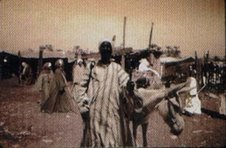
The Appearance of the Original Berbers According to European Perceptions
All the early major Berber tribes including the Masmuda, Sanhaja, Ketama Zenata and Nafusa are described as dark reddish brown like the “Indi’ or as “blacks” or Ethiopians in early documents. The notion of the early Berbers as being “whites” or Caucasoid is a new and racist one related to the concept of the African “Hamite”. Certainly the original Berber-speakers were never referred to as anything but “black” or something near it until the 12th century and were otherwise considered the color of Abyssinians and other so called “Indi”.
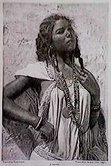
Even the Kabyles a notoriously fair-skinned “Berber” people of North Africa are up until the 19th century described as “brown” “apart from a few clans”. (See quotes below). The knowledge that Europeans were changing the complexion literally and figuratively of North Africa up until the 19th century has disappeared from modern European histories. Most know about the large part played by sub-saharan black slaves in the making of modern North Africa and Arabia while the white slave trade which was in fact dominant trade in North Africa until the fall of Constantinople (Istanbul in Turkey) in the 15th century had been largely ignored in historical writings of the 20th. Yet it was only a few centuries ago that Europeans visiting North Africa commenting on the fact that, “on almost every street of the cities of Barbary, Europeans could be seen harnessed to carts like draught horses or selling water from jars loaded on the backs of donkeys”.
1809 Commentary on those called “Moors” by an early 19th century observer: “They carry the Christian captives about the desert to the different markets to sell them for they soon discover that their habits of life render them unserviceable , or very inferior to the black slaves of Timbuktoo. “ from An Account of the Empire of Marocco, by J. G. Jackson published 1809 and 1814.
2003 – “From 1500 to 1650 when trans-Atlantic slaving was still in its infancy more Europeans were taken to Barbary than black African slaves to the Americas. See, Robert Davis Christian Slaves, Muslim Masters: White Slavery in the Mediterranean, the Barbary Coast, and Italy, 1500-1800, MacMillan Publishers, published 2003.
The impact of the white slave trade and its contribution to the modern biology and appearance of the modern North African stems from before the Arabian and Muslim waves into Africa. The Roman ruler Claudian spoke concerning Gildo, the “Moorish” ruler of Africa and treatment of Roman women from the Levant by this North African chief and his countrymen:
4th century – Claudian wrote, “ when tired of each noblest matron Gildo hands her over to the Moors. These Sidonian mothers, married in Carthage city must needs mate with barbarians. He thrusts upon me an Ethiopian as a son-in law, a Berber as a husband. The hideous hybrid affrights its cradle.” Claudian, by Claudius Claudianus, translation by Maurice Platnauer, Published by G.P. Putnam’s sons, 1922 p. 113. (Gildo was brother to other Berber chiefs Firmus and Maseczel. Gildo is related to Aguellid or Galdi which remains the modern Tuarek word for chief. Masek, Amazigh ot Imoshagh was the name for the ancient and modern Tuareg clans in general. The Mezikes tribes were called “Ethiopians” in a Roman text of the time. )
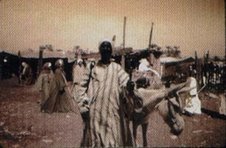
1stt c. A.D. – “Diodorus Siculus speaks in reference to the expedition of Agathocles a Sardinian general, of three Libyan tribes on the coast of Tunisia, the Micatani and Zufoni (see Zafan ),who were nomads and the Asfodelodi, who by the color of their skin resembled the Ethiopians” , p. 50 The Mediterranean Race Book XX, 38, 57 Guiseppe Sergi, 1901. The Micatani were also called Ukutameni and Khethim by Josephus. In later writings they are called Ketama Berbers. The name Maketa or Imakitan remains a name for the eastern branches of the Tuareg.
1st century A.D.– Marcus Valerian Martial was one of the earliest Europeans to use the phrase “woolly hair like a Moor” in one of his Satires, and the phrase was commonly used up until the Middle Ages. See Nature Knows No Color Line by J.A. Rogers, 1952. p. 50 The Muslim era didn’t begin until the birth of Muhammed, the Prophet, over four centuries after Martial. By the 7th century the word came to be used for Arabians who in the early era of Islam for the most part were also described as of near “black” complexion.
1st century Silius Italicus also describes the Moors with the term ‘Nigra’ meaning black. In the 3rd century Roman dramatist Platus or Plautus maintained the name Maure was a synonym for “Niger” which was a common term for the word black. 6th century Isidore Archbishop of Seville claimed the word Maure meant black according to Brunson and Runoko Rashidi in “The Moors in Antiquity” in Golden Age of the Moor, 1991.
6th A.D.- Corippus uses the phrase “facies nigroque colorus” meaning faces or appearance of black color to describe the North African Berbers. In his book Johannis, I/ 245.
6th A.D. – Procopius in his History of the Wars book IV contrasting the Germanic Vandals who had settled in North Africa with the Maures claimed the Vandals were not “black skinned like the Maurusioi” . The tribes he classified as Maurusioi are those now classified as ancient Berbers, the Numidians, Masaesyle, Gaitules, Massyles and Mezikes several other “Berber” tribes then settled between Tunisia and Morocco.
After the 8th century the term Moor came to be used for the many Arabian clans who had invaded the Mediterranean and Africa because of their complexions which were the same dark brown or near black to absolutely black color of the Berbers.
——————————————————————————————————–
1914 – Archeologists observance of the ancient North Africans portrayed in ancient Egyptian tomb paintings, “The brun Libyan type is the only one portrayed in the Old Empire, the xanthrochroids predominate in the New Empire representations.” P. 40 from The Eastern Libyan Oric Bates The intrusive xanthrochroids…do not appear before the XII dynasty… It safe to say that they were immigrants.” from The Eastern Libyans by Oric Bates Frank Cass publishers 1914. pp. 40 and 41. (These paintings of the ancient Libyans as a brown in color are in the works of Nina Davies.)
1939 – “The extreme long-heads, concentrated in the Hoggar and in parts of the Algerian plateau are the Tuareg and the purer families of ancestral nomadic Berbers, preserving the head form which they brought from East Africa, their Hamitic homeland.” Carleton Coon The Races of Europe, p. 257 1979 reprint.
Five major tribes of Berbers were spoken of by early Muslim writers including the Sanhaja, Masumuda Zenata, Ketama and Goddula which were categorized into dozens of others which in turn were divided into many more. Among them were the early Kabyles originally a group of Sanhaja Berbers. Most descriptions refer to the modern Kabyles as fair-skinned, but in the 19th century and early 20th, descriptions and in fact many photographs depict them as dark and near black. (Photos from the 19th century show both very dark-skinned and near white skinned Kabyle individuals from different villages in the region).
1890 – “The Kabyles or Kabaily of Algerian and Tunisian territories…besides tillage, work the mines contained in their mountains…They live in huts made of branches of trees and covered with clay which resemble the Magalia of the old Numidians…They are of middle stature, their complexion brown and sometimes nearly black.” Written in The Encyclopedia Britannica: Dictionary of Arts, Sciences and General Literature Henry G. Allen Company p. 261 Volume I 1890.
1834 The Scotsman Thomas Campbell says, “The Kabyles…dress like the Arabs and a part from a few tribes, are brown complexioned and black haired” p. 109 Barbary and Enlightenment: European Attitudes Toward the Maghreb in the 18th Century, Ann Thomson. Published 1987 by E. J. Bull
A description by Gillebert d’Hercourt in Etudes Anthropologiques sur Soixante-Seize indigenes de lAlgerie in 1865 said the Kabyle crania that were studied were generally dolichocephalic. In fact the physical anthropological studies done on ancient and modern North Africans show that early North Africans were dolichocephalic like the Tuareg and other dark-skinned berber tribes.
Not surprisingly most modern Berber-speakers who are fair skinned including modern Kabyles are predominantly mesocephalic (middle headed) or even brachycephalic. It is interesting that the dress of these modern Kabyle women resembles that modern women of the Balkans and that palm and blood group types are also like those of European Mediterranean Greeks. Many of these Kabyles also have a strong Turkish influence as judged from the recognizable Turkish Eurasian or even East Asian facial features. Obviously some groups other than a Berber one makes up the main genetic strain in many modern Kabyle-speakers. Culturally the modern fair-skinned Kabyles have been documented as among the most patrifocal people in North Africa whereas the ancient and modern Berbers like the Tuareg were notably matrilineal and matrifocal to the chagrin of early Muslim documenters who considered this among their ‘wicked” customs.
1901 – The Oases if Nafzawa and Wed Suef and Wed Regh and other Berbers of the Sus as “of very dark complexion” in Guiseppi Sergi The Mediterranean Race: The Study of the origin of European peoples The Walter Scott Publishing Company
On the Libyo Berbers called – Gaetules or Jeddala
The Gaitules were the most populous of the Libyan tribes of Strabo’s time (1st century AD). Josephus claimed they were descended from Havilah or the Avalioi who he says children of Kush child of Ham.
1st -2nd century – Juvenal, the Roman writer in his Satire V. 53 referred to “a Gaetulian, as a black a Moor “so black you’d rather not see him at midnight”.. Found in Madan’s translation of Juvenal, vol. I by J. Vincent published at Oxford.
Among the Gaetules were a tribe Dari or Darae Gaetuli, there was also a stream called Daradae Ethiopus (DARAE were a Gaetulian tribe in the W. of Africa, on a mountain stream called Dara, on the S. steppes of M. Atlas, adjacent to the Pharusii. (Plin. V. 1: Oros. i. 2: Leo Afr. P. 602.)
The Draa (Arabic: ???) (also spelled Dra or Draâ, in older sources mostly Darha or Dara) is Morocco’s longest river (1100 km). “The inhabitants of the Draa are called Draawa (an exonym), the most famous Draawi undoubtedly being mawlay Mohammed ash-Sheikh. Outside of the Draa region this name is mostly used to refer to the dark skinned people of Draa which make up the largest portion of its inhabitants.” Retrieved May 13th 2008 from
http://www.nationmaster.com/encyclopedia/Draa-river
Descriptions of the Masmuda, Sanhaja, Ketama, Zenata Berbers of coastal North Africa and the Upper Atlas
Most Arab-speaking historians beginning as far back as the 8th century when Wah ibn Munabihh a South Arabian and descendant of an Iranian mercenary claimed the Berbers belonged to black races of Ham. Several Muslim writers claimed the Berbers were the sons of Berr who were said to descend from Mazigh ibn (son of ) Canaan Ibn Ham Ibn Nuh (Noah). The tradition found cited in Nafousa: Berber Community in Western Libya, Omar Sahli citing Dabbuz. Retrieved on-line from http://www.tawalt.com/monthly/fessato_1.pdf , July. 12, 2008.
The Zenata are called a Canaanite race by other Muslim writers see ‘The Berbers” Geo. Babington Michell, Journal of the Royal African Society, Vol. 2, No. 6 (Jan., 1903), pp. 161-194. The traditions state that in fact Berbers were descendants of Amalekites (Amalek) from Canaan and Himyarite from Yemen both descendants of “Adites” that had invaded Egypt before 1200 B.C. and “advanced toward the Maghreb”.
The Berbers as represented by the Tuareg especially appear to have called themselves Mashek or Mazigh who are associated with bringing the camel into Africa. Mashek is still the name of a tribe of the Mahra of Oman and Hadramaut who also claim an origin in the Yemen.
( In early Arabian tradition the lowland of Canaan or the Kenaniyya tribe was in an area of the western region of Arabia north of Yemen and not farther to the north in modern Palestine or Israel. See the Bible Came from Arabia. Kamal Salibi )
11th century – “The Berber women are from the island of Barbara, which is between the west and the south. Their color is mostly black though some pale ones can be found among them. If you can find one whose mother is of Kutama, whose father is of Sanhaja, and whose origin is Masmuda, then you will find her naturally inclined to obedience and loyalty in all matters, active in service, suited both to motherhood and to pleasure, for they are the most solicitous in caring for their children. “ 11th century the Christian Iraqi physician Ibn Butlan quoted by historian Bernard Lewis.
11th century – Nasr i Khusrau, an Iranian ruler described the Masmuda soldiers of the Fatimid dynasty as “black Africans”. See Yaacov Lev, “Army, Regime and Society in Fatimid Egypt, 358-487/968-1094″, International Journal of Middle Eastern Studies, 19.3 (1987) p. 342.
13th century – Primary Cronica General of Alphonso X of Spain describes the 300 Almoravid “Amazon” women whose leader is described as black and Moorish. They were “led by their leader Nugaymath al-Tarqiyya (the “star of the Tuareg archers” in Arabic) who led the Almoravid siege of Valencia”; cited in Nubian Queens in the Nile Valley by Carolyn Fluehr-Lobban, Ninth International Conference of Nubian Studies, Museum of Fine Arts, Boston, USA. See also The Berbers in Arab Literature by H.T. Norris 1982.p. 20. Harvey , L.P. “Nugaymath Turquia, Primera Cronica General, Chapter 956” Journal of Semitic Studies 13, no. 2:232. Targiyyat or Targiya is a variant form or pronunciation in North Africa for the name Tuareg. 13th or 14th century Abu Shama, a Syrian, described the Masmuda Berbers as “blacks” in his, Kitab al-Ravdatayn. Found in Golden Age of the Moor, 1991 edition p. 57, edited by Dr. Ivan Van Sertima.
14th – The Almoravid or Al Murabitun dynasty coming from the Atlas was one of the last dynasties coming from Africa to rule in the Iberian peninsula. One of the 11th century rulers of Andalusia and North Africa was Yusuf Tachfin who had come from a long line of miltary rulers. According to “Roudh el-Kartas” (History of the Rulers of Morocco) by Abd Allah, and A.Beaumier’s French translation of the 14th century work, Yusuf was of “brown color”, of “middle height” with , “ thin, little beard, soft voice” and “woolly hair”. The Almoravid dynasty was supposedly composed mainly of Sanhaja clans of Massufa, Joddala (Gaetuli) and Lamtuna (or Auelimidden Tuareg)- the Auelamidden have since moved southward and live in Niger.


Everything that Queen Dana says in her article about the original black Berbers of North Africa, is confirmed into these following books (written by French Scholars) :
- Recherches Anthropologiques sur la Berbérie Orientale : Ernest Chantre et Lucien Bertholon ( Tome 1 and 2)
You can download the 2 volumes from this link below, click “Recherche” and search with the Names Bertholon or Chantre :
http://gallica.bnf.fr/
- HISTOIRE ANCIENNE DE L’AFRIQUE DU NORD : Stéphane GSELL ( 8 Tomes)
You can download them from this link below
http://www.algerie-ancienne.com/livres/gsell/gsell.htm
Into these 10 volumes you can find many proofs or clues concerning the existence of the ORIGINAL black Berbers [often called western Ethiopians by classical historians like Romans and Greeks; See : GSELL, TOME 1, Page 295 to 304] during Antiquity and later on.
The Black Presence in North Africa ( Algeria, Tunisia, Libya ) during the Paleolithic and NEOLITHIC periods is also demonstrated: [Bertholon TOME 1 ; pp 237 to 241]
Please take special note of Pr Lucien Bertholon acknowledging that Black people in Carthage were in the highest spheres, specially our African Queens/women :
- Pages 270-271 TOME 1 ;( The African woman Priestess of TANIT and found in a rich design sarcophagus).
- Page 279 – TOME 1; about Africans found in Carthage he says :
“Ce ne sont pas des individus quelconques” ie “They are not common individuals” ie They were not the slaves that you see in racist movies or read of in Eurocentric books…
Page 280 – TOME 1: He speaks about another African woman found in a rich sarcophagus.
He says that their type or race ( African women found in the highest spheres of Carthage) still existed in North Africa when they were doing this study…
Furthermore, the African woman Priestess of Tanit had affinities with the Negroid Neolithic race found in North Africa at Tebessa ( Berber region) ) by Debruge [ See Tome I page 237]
There are many affinities between the Nubians and the Negroid Neolithic inhabitants of North Africa, the later can be called ETHIOPIANS [ Tome I, Page 331]
See also Stéphane GSELL [Tome IV page 174 to 177] , for African presence in Carthage.
GSELL further says about the slaves in Carthage that : ” Les Pays Méditerranéens alimentaient largement les marchés d’esclaves” ie “Mediterranean Countries supplied fully the slave markets ” ie White slaves were predominant in Carthage….[Tome IV page 140]
About the Moors’ descendant of Spanish Moors (Andalous) who settled in Tunisia in 1609 , Lucien Bertholon and Ernest Chantre say :
” La peau est bistre souvent à fond rouge” ie ” The skin is bistre often a red color” [ Tome I page 369]
Here is the color that he called ‘BISTRE” :
http://pourpre.com/chroma/dico.php?typ=fiche&ent=bistre
He could have say BROWN COLOR…
I have always had a doubt about the ancient people called NUMIDIANS, Chantre and Bertholon say that in the MEDRACEN [ Numidian ROYAL MAUSOLEUM] all skulls found were PLATYRHINIAN : [Tome I page 325] ie Numidians of the highest cast were certainly black men…
The blond type Berber existed as well, but they arrived later in North Africa.
Thet Distinguish 2 different “races” in Neolithic North Africa :
- “MESATICEPHALIC NEGROID” : A NEGRO RACE
- “A DOLICHOCEPHALIC , SMALL , MESORHINIAN RACE” : HIGHLY MESORHINIAN is for highly “medium” Broad Nose (sic), they emphasize that this race were subject to frequent PROGNATHISM ie ANOTHER BLACK RACE…[TOME 1 page 241]
Enjoy !
PS : You may use a translator unfortunately it’s not in english, specially for the Haters…
Hi Nehesy, Thanks for mentioning Tome. I will definitely look this up. I ‘ve used in the past Gsell, Gautier and also Hiernaux is a great source for info on ancient North Africans, Saharans and their connection to Ethiopians. I saw a long time ago in a book on ancient Egyptian paintings which showed Carthaginians in their dark brown color often with prognathous aspect. Now since I can not picture anywhere I am starting to think I imagined the photo although i know Sergi mentioned as well they existed..
Some on this site mentioned that there were “copious” numbers of people of Arab Moorish and Libyan background. It should be understood that the word ‘Arab” before it became the name of people who speak Arabic was originally the name for a people who caled themselves “the blacks”. According to Ibn Manzur or Mandur the well known 13th c. linguist of Lisaan al Arab, they in fact called themselves as such because they were mostly “dark brown in color”. Another translation says “It is said that he (Al Fadl) meant that he is from the purest of the Arabs because most Arabs are black-skinned”. Quoted from The Unknown Arabs by Tarik Berry. In Tarik’s book are other quotes by Arabic historians and linguistics who say such things as “Lank hair is the kind of hair that most non-Arab Persians and Romans have, while kinky hair is the kind of hair that most Arabs have”. Abn Abd Rabbu in El-Iqd el Fareed said that early Arabs said things like,”A fair-skinned Arab is something inconceivable or unthinkable.” A common saying by the true and pure Arabs was ” light-skinned as if he is one of the slaves.” Just as in Europe the phrase “woolly hair like a Moor” or “black as Moor” became common. “Red in the speech of the people from the Hejaz, means fair-complexioned and this color is rare amongst the Arabs. This is the meaning of the saying…a red man as if he is one of the slaves’ The speaker means that hsis color is like that of the slaves who were acaptured from the Christians of Syria, Rome and Persia.”
Today people of Syria and Iraq who have little Arab blood but are more Eurasiatic than AfroAsiatic see themselves as Arab as do Westernerns. Early Arabs, however, looked down on people the color of most Syrians as shown by many early quotes and modern Syrians and Iraqis would have been considered what they are – mainly descended from their subject people and concubines. Iraqi “Arabs” who had been the result of intermixing for over a thousand years with non-Arabs moved into the Persian Gulf a few centuries ago, and thus we have the many fair skinned high -class Arabs there. But they come from a tribe named Anaeza or Anaisa bin Wa’il whose clans were notoriously “black” in early Arabia, and originally from the Yemen. Many of their clans such as the Murad (or Amurath) who never left the Yemen are still African in appearance. It is these African or original Arabs who left south the Yemen and north Arabia, Hejaz and Nejd (Central Arabia) to conquer Syria, Iraq, Spain and North Africa. They became most of the Moors or Moro of the Iberian peninsula for several centuries before the bulk of the Berber Moors or Sanhaja, Zenata groups also mostly dark brown entered the peninsula. These Moors Arabs and Berbers toward the latter centuries continued to bring great numbers of European women into Spain and Protugal and other slaves into the Canary Islands. Africans must learn and recover their history and languages so you can preserve your heritage or others will steal them away for good.
Hi Dana
Bertholon and Chantre [page 267; Tome ] say that the second African woman found in the rich sarcophagus (number 4) had all the characterics of the small dolicochephalic brunette skin race : ” la petite race dolichocéphale à peau brune”.
It’s undoubtly Giuseppe Sergi’s concept.
They described her with the priestess of TANIT [ TANIT shares many characteritics with AKUABA the Ashanti "deity"] as ( page 267 , 279, 280 Tome 1) :
1. “Dark red” skin
2. Negroid
3. High Prognathism
4. Platyrhinian
5. Dolicocephalic
6. Small (Height)
If we add the 6 features we have the definition of Sergi’s “EurAfrican Race” or more properly the Black African race who spread civilisation outside Africa.
So It’s highly possible that you saw this picture.
Bertholon and Chantre generally use a scientific “jargon” in order to avoid the words “black” , “African”, or to mislead people.
They show some racist bias as well, for Instance Bertholon and Chantre say in one hand that this negroid people were to be found in North Africa since Paleolithic and Neolithic ( Page 237)…
Latter they assume that Phoenician imported Africans (ie slaves) in Carthage, and contradict themselves (Page 304 : Tome I) …
It’s a trick to deny our history, because many scholars like Joseph McCabe for instance acknowledged that Phoenicians had many slaves from the North ie Barbaric Nations ie the EUROPEANS’ ancestors.
Some Phoenicians kings had Negroid Features too : TABNIT and ESHMUNAZAR II for instance.
TABNIT :
http://www.insecula.com/oeuvre/photo_ME0000081149.html
ESHMUNAZAR II (his son):
http://portal.unesco.org/ci/en/ev.php-URL_ID=16949&URL_DO=DO_TOPIC&URL_SECTION=201.html
Anyone who want to see pictures of black African phoenicians ( taken at the British Museum) please consult the following book :
“When we Ruled” by Robin Walker.
The next time I’ll go in London I’ll look for them if GOD wills…One of them represent An African Princess or Deity :
http://tinypic.com/29zwuhw.gif
Thanks again for your scholarship
PS : IF I MAY, You should write books about the Black Berbers and Original Arabs.
I bought Tariq Berry’s book and one wonderful thing he said about Ibn Mandhour’s book “Lisan el Arab” (About the Name ADAM), was confirmed to me 2 years ago by a Somali Brother who had studied at AL AZHAR.
This friend told me that ADAM means BLACK EBONY in colour (In ARAB Language) and he gave me Ibn Mandhour’s references.
Unfortunately I don’t read Arabic. But I’ll definitly learn this language if GOD wills.
Regards
Hi Nehesy,
First I would like to say I’m glad you have Tariq’s book. Secondly, I think the most important book is, The Bible Came from Arabia, by Kamal Salibi, which proves the Arabian origins of the Canaanite,Philistines, Israelite and other Afro-Semitic peoples.
But before I continue I would like to ask again if you can translate for me the exact source of the Cairo Lettre about Ramses and the statement below. i went to the site and read the French statement below.
“…Their size (ancient pharoahs) was rather average, with the exception of Ramses II whose analysis of the genes proved that he was tall. It was also demonstrated that his skin was brown and that its hair were black, and not a red-haired person. The red color which was found on its mummy is due to a dye (probably of the henna). His eyes were black with a light tint of brown color…”
Also, I am familiar with Bertholon and Chantre’s findings from Diop’s book, however,’ the Carthaginian painting I saw was not a woman, but they were of copper black-skinned soldiers wearing hairstyle similar to Egyptians and Medjayu nubians and with more prognathousism than on the usual Medjay statues.
Sergi described his small Mediterranean type as pygmies by the way and they must be similar to the very small dolichocephalic dark brown Arabian types “with attenuated limbs” still living in Hejaz ,Asir and Yemen. I just happen to know they exist because of having lived in the Arab section of Brooklyn.
Very glad to see you have bought Tariq’s book. I will be putting much of a book I’ve been working on for the last 30 years on my site within the next 2 months – God willing. Its just that every time i get ready to try to publish it I find more startling information. Tariq’s book, for example, which I had just seen last year confirms my findings that the early Arabians were all dark brown and black in appearance, and that these were the clans that were called Moors in Spain see in his book early quotes and statements about the Arabian Banu Abs’ . Sulaym, Khazraj, Aus, Hudhail, Maddhij, El-Nakha, Kinaniyya, Tamim clans and individuals. All of these groups lived in and founded the cities of Seville, Grenada, Toledo, Cordoba, etc. and yet now it is argued that one is being Afrocentric if one says the Moors were called “black”.
One can see in Donald Hardin’s book called , The Phoenicians, how they were portrayed by the Egyptians, -just like the modern men of Eritrea and Ethiopia. And yet there was supposedly some had problems with the fact that Vin Diesel played Hannibal because he is half black, when in fact it would have been more realistic to have had a much darker person like a Fulani or Tuareg of Mali play him judging from ancient . Also it is not true that the Hyksos people were for the most part Eurasiatic . They were generally early Canaanite or Amalekite (Meluhha) peoples represented by the modern Imashlagha Tuareg, Amlukh in Yemen, Rahawein and Mahra of modern Yemen and Somalia. The ruler Khaian whom you mention is in fact seen in the Afro-Arabian genealogy maps in Tarik’s book and called el Qiyan. Lenormant had it right in claiming the early Hysksos were originally Cushites related to the Galla Oromo. peoples.
Hi Dana
This website represents the official information website of the Egyptian Arab Government : Egypt State Information Service.
According to the first line :
“Dans le cadre des recherches effectuées par l’Université du Caire en collaboration avec le Conseil supérieur des antiquités, il a été possible de parvenir aux caractéristiques anthropologiques des Pharaons”
Translated below
” …Within the framework of the researches made by the University of Cairo in association with the superior Council of antiquities, it was possible to reach the anthropological characteristics of the Pharaohs…”
This Study has been led by The University of Cairo [Université du Caire] in collaboration of the superior Council of antiquities [Conseil supérieur des antiquités] which is linked to the Egyptian Governement.
Lettre du caire numéro 58 du 25/04 au 01/05/2000 :
Cairo Letter number 58 : 25/04/2000 to 01/05/2000
Unfortunately they didn’t give the full study, and the name of the authors. They just published a summary of the results obtained by these two entities.
Regards
Please visit : http://www.youtube.com/watch?v=pJuT7m1wckE
put up by someone named Sarrys
Thanks Nehesy
By the way I found this video in black and white showing Arabs of Jizan south western Saudi Arabia. I guess in the early part of the 20th century dancing very much like west Africans. i was stunned. Jizan is part of what Salibi rightly considers the land of the original Israel and ancient Canaan before they moved north. Enjoy
THANK – YOU NEHESY!!!
Regards
Thank you Dana, indeed it looks like an African Dance, more specially : NDOMBOLO in RDC ( Congo). Anyway their drum sounds african, and the rhythm is african too.
I met many black arabs in London, and they were from the higher class. Many of my Somali friends told me about them, specially in south Arabia.
Now I’m asking myself if many blacks in Africa who claim ancestors in Arabia/Yemen were not rights if their assumption.
I used to think that it was false testimonies in order to be closer to Islam religion ( by saying that ther were SHERIFF or descendant of Mohamed-saw).
But now I’m seeing this assumption , with a different eye.
One thing is sure though Tariq Berry made a little mistake when he said that the name SENEGAL comes from the berber tribe SENHAJA.
In Wolof, the most important language in SENEGAL , our original country name which is SENEGAL before the French arrived , was called SU – NU – GAAL by the natives:
SU – NU : means OUR in English [NU is pronounced with the SPANISH letter "N"]
GAAL : means a BOAT/ DUGOUT in English.
So SENEGAL meant originally ” IT’S OUR DUGOUT” in Wolof.
French transformed SUNUGAAL into SENEGAL, because they could’nt tell it properly.
Even for the capital : DAKAR or DAKHAR in wolof pronunciation
DAKHAR [Tamarind in English] was a big tree , below which our elders used to gathered in order to discuss important issues.
This was the most important place which is located in actual capital of senegal. So the french named the capital Dakar according to the place where our elders used to gathered for special purposes.
The city of DAKAR/DAKHAR has been founded by the LEBOUS an “ethnic” group who is closed to the WOLOF. They are (were) mainly a FISHER group.
DAKHAR in their language means TAMARIND. Many kings came from their group like DIAL DIOP, or LAT DIOR DIOP.
They fought hardly against the slave traders, along with SERERS another ethnic group who have many affinities with Wolof. They both came from the NILE Region.
The late Pr Cheikh Anta DIOP [RIP] was a LEBOU as well.
One last thing in Senegal the people that we call MOORS or MAURES in French are BLACK at 80 %. They even have the arabic accent.
The MOORS in Senegal are reknowned for being the best smiths specially for silver jewels. In senegal we all wear silver bracelets for SILVER’s medicinal virtues. It’s a tradition from our ancestors of the NILE VALLEY.
@ Rozi , you’re very welcome
I met many learned Jamaicans in London. God Bless my Jamaican Brothers and Sisters.
Where is Sasha ? How come he doesn’t answer ?
Another clue for him: Stephen GSELL [ Tome 1, Page 303] says that negroid people have been found in Algeria in the city of ORAN. They were troglodytes of the NEOLITHIC Period…This clue comforts FURON PALEOLITHIC foundings…
ndiadia ndiaye ….was the king of the wolof people.hes father from sanhajal tibe.
abuba cri bin oumar //so do your on math. the senegal IS ZENEGA OR SENHAJAL
Im original of nother senegal //toucouleur/ do to use a plesuarism.
Hi Nehesy – yes, I think there are afseveral major mistakes in Tariq’s book. However, I think I had also read the idea about Senegal being derived from the nameSanhaja came from Cheikh Anta Diop, I had seen that written somewhere myself, but not sure if it was Diop or somewhere else.
Also, interesting about what you say on the Moors and silver smithing that was supposed to be one of the traits Moors brought with them when they came to America with the Portuguese. I was just listening to someone talk about this on Youtube.
As for the Oran skeletons you were talking of i think they are supposed to be Capsian related.
“Moorish women” sing in Mauritania.
http://www.youtube.com/watch?v=2PNgVzIL0yg
As to where is Sasha? This is probably Mathilda of Mathilda’s blog or someone who likes to rely on her . She’s the one that often spouts that stuff about the white Paleothic African roots of Kabyles and claims I misquote Coon without giving the documented refutations.
Fortunately having specialized in Western theories of biological evolution of holocene and prehistorica North AFrica at the University of Chicago I happen to understand where many both (black and white0 getting involved with history writing are misinterpreting recent “genetic” studies and applying them to neolitihic and more recent populations haphazardly. This is not the way to rewrite histroy.
It creates enormous problems when one tries to create history with the conclusions of a relatively recent and developing science. Its being done all over the internet to the point where Mathilda and friiends are calling ancient Nubians “50 percent” Caucasoid – whatever that means. In fact although genetically- based studies alone can speak of biological affiliations they can not usually validate where people have originated in the holocene as most populations are not in the same location they were in during the neolithic, let alone paleolithic.
Actually, as for the Oranians – although most during the neolithic may have been related to dolichocephalic “negroids” as Gsell and others termed it, some of the skeletal evidence of the prehistoric Taforalt and Oran culture in the paleolithic period were mesocranic or brachycephalic and greatly different in appearance then most Capsians and other so called Ibero Maurusians like the Mechta Man and populations of Jebel Sahaba and Wadi Halfa. That had been known long before genetic studies.
Eurasiatic or non-African populations also occupied Cyprus in the paleolithic. The culture of such peoples, however ,was markedly different then the dolichocephalic African-related paleothic peoples in North Africa adn Aurignacians in Europe who seem to have been associated with the mother Goddess cult even at that early time. This is judging from the findings of Mellaarte and other earlier physical anthropologists.
caucasions being 15,000 years old,,,,,,,,,,,,,,never 6000 ,they grafted,all wRitten after thAT BOUT PATAGONIAN BLONDES WAS A FALSE PLATFORM UP TOP by sasha.DONT BE DISTRACTED BY THINGS THAT LOOK NTELLIGENT BUT ARENT LIKE15000 YEAR OLD CAUCASIONS SENDING THAT ARGUMENT SOUTH AN OUT OF THE REALM OF REALITY.TO WRITE SO MUCH BEHIND A FALSE PLATFORM RELIGION IS AN INSULT TO THE INTELLIGENCE OF THE BLOG.he knows .amazighs are the white moors people are claiming an they are not the original.,,,,,,,,,,,,,,geographical flip not in any hizzzztory books.seek that knowledge from moorish science temple ,the C.M BEY,clock of destiny volume one/TWO an the zodiak constitution.NO ONE MENTIONS SUISSE FROM MOROCCO,THEY WILLTELL YOU WHERE THE GERMAN AMAZIGHS COME FROM AN WHO EVER ELSE IF YOU TRY TO SAY THEY WERE IN AMAZIGH NOW MOROCCO IN 1950 BEFORE THEM,GERMANY THEY HAVE SHOWN YOU THE MOORS OF EUROPE YET THE ONLY ONESEVER SPOKEN ON ARE THE ONES WHO TOOK SPAIN ,THE LAST ONE TAKEN BY MUURS,THE REST OF EUROPE WAS CIVILIZED BY US AN THEN WE WERE EXPELLED LIKE THE TEMPLARS AN AT TIMES REPLACED BY THEM WITH THAT NAME ,ORIGINL TEMPLARS ,MUURS SAXONS ,THATS THE GAME.LONDON BRIDG IS DRAW BRIDGE THAT HAD MY FAIR LADY TIED TO IT AS IT OPENED SPLITTING HER IN HALF FOR BEING FREE THINKING AN CALLING HER A WITCH CAUSE A WITCH WOULD NOT S-WITCH, TO BOWING DOWN TO THE PHALLUS,LONDON BRIDGE IS FALLING DOWN MY FAIR LADY.360 DEGREE FROM NEHESY AND DANA
I’ve read this article regarding berbers in north africa especially in Algheria, I found that in many historical events were false, even in the photos, which attributed to Kabyle while the women’s suit have nothing common with Kabyle, but it’s more konowen in the Aures Chawia. the second photos of the boy is more knowen in Morocco than Algeria.
These photos are on-line from photos of the late 19th century. They are called Kabyle by the people who had photographed them. The Chawia are normally thought of as a not very dark people as well. let us not forget there were two different Kabyles spoken of by Europeans. One was obviously more numerous and darker and different than the other. One also dressed like the Arabs and the other dressed like the Greeks. The original Berbers of Kabylia and the Aures were Zenata (Ifuras), Hawara and Ketama, not Greeks who adopted Berber dialect.
1890 – “The Kabyles or Kabaily of Algerian and Tunisian territories…besides tillage, work the mines contained in their mountains…They live in huts made of branches of trees and covered with clay which resemble the Magalia of the old Numidians…They are of middle stature, their complexion brown and sometimes nearly black.” Written in The Encyclopedia Britannica: Dictionary of Arts, Sciences and General Literature Henry G. Allen Company p. 261 Volume I 1890.
1834 The Scotsman Thomas Campbell says, “The Kabyles…dress like the Arabs and a part from a few tribes, are brown complexioned and black haired” p. 109 Barbary and Enlightenment: European Attitudes Toward the Maghreb in the 18th Century, Ann Thomson. Published 1987 by E. J. Bull
Damn !!!! I visited Mathilda’s website , which is full of crap, and this woman does’nt have any education. Her churlishness is very repulsive…
And the so called berbers who posted on her website, are not a surprise for me…As I told you , nowadays, North African Women from Algeria, Morocco, and Tunisia, are using chemical products in order to straighten their hair, and skin bleaching products specially in Morocco ( Like in the EAU, Jordania, Syria, Lebanon, or India..).
Their men used the same tricks to look more European. But only Afro-descendants can actually have nappy hair.
When it’s raining, they run if like the devil were behind them… looking for a shelter
They have been colonized mentally, and think that having a white skin is a sign of beauty, I guess it can be explained by the French colonization.
Specially Algerians, they forgot why the French attacked and colonized them in the 19th century : Stopping the white slavery in North Africa.
Anyone who reads French can find articles about the first Berbers who were Blacks. French scholars like Bertholon, Atgier, and Adolphe Bloch were all agreed about the fact that the term moore or maure was initially used for the black men who lived in North Africa.
Dr Adolphe Bloch wrote an article named :
“On native black races which existed formerly in northern Africa” or “Sur des races noires indigènes qui existaient anciennement dans l’afrique septentrionale”.
He presented this article at the French Anthropology society in 04/08/1896, available on the website Gallica.
My younger sister went to morocco 2 years ago , and as she looks like a somali, moroccans talked to her, and thought that she was a Moroccan berber…Black berbers is a reality not a myth…
Greets Jahdey, Tariq, Nehesy –
Nehesy I just saw your funny comments about the Mathilda pseudohistory blog. I won’t put the word anthropology into it as she doesn’t even apparently understand when the neolithic began. I shouldn’t have been so surprised though.
Some Moroccans came up to me too and questioned if I were one of them. They thought I was trying to pass for something else because of the way most North Africans are treated in France I guess. I am around the same color as Obama though. I don’t consider myself fair.
This is very interesting about the French attacking North Africa because of the white slave trade. Do you have any sources i can look at about this. I will also look at this website Gallica. i like to read early European writings on the Berbers and other now mixed people. Many seemed to have been quite aware the original appearance of the Berbers and other ancient peoples of the Mediterranean. It was from Richmond Palmer I learned that Roman texts have many different European tribes settled in ancient Mauritania living along side the Berbers – iIncluding the Armeni, Phrygi, Vandali, and others aside from the Romans. The term “Berber” for modern fair-skinned Berber speakers must have come to be only within in the last two centuries or so since no mention is made of this before then.
In a recent book (2008) , the french scholar Didier Lahon ( University of Rio de Janeiro) says that Mulay Mohamed Cheikh a Moroccan prince son of Mulay Mohamed (el mesloukh) was accepted in the Order of Santiago in 1594.
His father was an ally to Don Sebastian the first, both died during the battle of Alcacer Kebir in 1578.
This Moroccan Prince named Mulay Mohamed ech-Cheikh was a Black man according to Didier Lahon. See this book below page 223:
http://www.mat-editions.com/
“Les Africains et leurs descendants en Europe avant le XXe siècle.”, It’s a kind of “AFrican presence in early Europe” from Prof Sertima (RIP)
Hi Nehesy! Do you mean to say that Senegal was called Senegal or Suu nuu gaal before the arrival of the French? Also, do you agree that the Zenega were in the region when the French arrived, which was my point in mentioning the origin of the name Senegal?
Tariq
Greetings Teacher Tariq Berry
Thanks for dropping by Rastalivewire.
DJ
Greetings Don Jaide!
Take a look at this Nehesy http://www.hu.mtu.edu/~dshoos/HU3262/HU3262SenegalHistoryof.htm
And this Nehesy http://books.google.com/books?id=iWxZ9JV-UOEC&pg=PA71&lpg=PA71&dq=zenega+senegal&source=bl&ots=PVcdgqEsE4&sig=x4j925N5jjG0HMTzwK-
And this one Nehesy http://everything2.com/title/Senegal
And this http://www.1911encyclopedia.org/Zenaga
And this one Nehesy http://www.lebentenier.org/site%20anglais/visits.html
Hi Dear Tariq Berry
Europeans can’t explain our history , one of the main reason is because they don’t understand our language.
The Portuguese (slave raiders) arrived in Senegal the first and they didn’t meet the moors, but the serers who killed a bunch of them;
I know this thesis : Senegal is from the Zenaga (which was a pejorative name in the time of the french colony see Maurice Delafosse) berber tribe is highly diffused but it’s wrong:
- Su Nu Gaal means Our Dugout, the name of the country Sénégal is taken from the river Sénégal; like for the country Congo and the river of the same name;
- When the french arrived in our country, Moors didn’t rule Senegal, the Almoravides kingdom was passed away many centuries ago. We had many kingdoms with black african rulers: Baol, Cayor,Djoloff; Wolofs; ie the moors didn’t rule our country during the French colonisation; They were settled in the North at Mauritanian/Senegalese border like nowadays;
- The Almoravides berbers didn’t rule Senegal even if they were settled there in order to flee the persecution ( Berbers were generally christians or jews before their rising); Their capital was Marrakech in Morocco (founded by Yusuf Ibn Tashfin);
- There were also black Almoravides named Mannas, Yusuf Ibn Tashfin ( whose mother was soninké or Sarakhollé) and his cousin Abu Bakr were allied to War Diabi Ndiaye King of Tekrour and Ibrahima Sall; This is why there wasso many black soldiers and rulers in Spain during the Almoravid period. Yusuf Ibn Tashfin himself was a black African and had many africans in his family [ See the work of , Seidou Kane and Aboubacry Moussa Lam ]
- What I was trying to say is that the Almoravides was a group of Berbers (Black and White) allied with muslims West Africans rulers (Fulanis and Tuculors mainly);
- The Zenaga ( many berber tribes, Lemtuna, Sanhaja,Messoufa etc) were generally settled in North Africa (Morocco, Algeria etc) , while few of them lived in black Africa; Even today the majority of the zenaga are in North Africa specially the Sanhaja (who lived in Morocco);
- In Mauritania for instance it was not the Zenaga who had the power but the Hassaniya;
- As I explain to Dana earlier, the name of the actual capital of Sénégal is Dakar in French , in our Language it’s Dakhar (Tamarind), the “kh” is pronounced with the “j” in spanish; Dakhar was the Name of the tree where our ancestors used to have meetings in order to settle important issues. But they called our capital Ndakarou which is now Dakar;
- French did the same in many countries in Africa, for instance Algeria (Algérie in French) was named Al Djazair by the locals, french could’nt say it so they transformed it into Algérie;
- Abbé David Boilat (19th century) a french bishop ( his mother was senegalese , a signare) who understood wolof had the same explanation of the name senegal; Maurice Delafosse who studied many years the languages and peoples of the French sudan (West Africa), has the same too;
- Moors have never ruled the senegalese specially the wolof who is a warrior people; even during the slave trade their arrival were forbidden in many new countries: Hispaniola, Porto Rico, Colombia, Panama etc. They were the people who led the first slave rebellion in the new world: Santo Domingo (1522), Porto Rico (1527), Panama (1530, 1531) etc;
- The Moors have been enemies to west Africans countries since the 16 th century when the king of Morocco destroyed Tomboctou with his English Allies ( Djouder Pacha) and their guns and canons;
- During the slave trade French and british (Governor O’Hara) provided guns to the Moors of Mauritania in order to destroy the senegalese people and to provide slaves to these slave dealer nations. Since that time ours relations are based on distrust;
If you know any senegalese in New York learned or not, around you please ask him. You can even contact the senegalese scholars at University Cheikh Anta DIOP, they won’t accept this equation : SENEGAL is from ZENEGA;
Regards
Hi Nehesy,
You said:
“Europeans can’t explain our history , one of the main reason is because they don’t understand our language.”
Unfortunately, much of what is written and read in the history books of the former colonized countries of the area was written by the former colonizers.
You said:
“Su Nu Gaal means Our Dugout, the name of the country Sénégal is taken from the river Sénégal; like for the country Congo and the river of the same name”
But read this:
“As early as 1850 Abbey David Boilat wrote in his Sketches of Senegal that it was in fact a deformation of the Wolof words suñu gaal, meaning “our pirogue”. As it is a very popular explanation, it is the one most frequently found in the media. However, since the 1960’s it has been questioned and several other etymologies have been suggested, including its being attributed to the toponym of a Saharan Berber tribe, the Zenaga. Even today the debate continues.
Who is this Abbey David Boilat? Read this:
Boilat, Abbé Pierre D.
fl. 1840 to 1853
Catholic
Senegal
One of the first French-assimilated Senegalese, he was the first African to study African culture and society from a Western perspective.
He was one of a group of young Senegalese selected by missionary educators to study in France in order to prepare for teaching in Senegal. Ordained in France in 1841, he returned to Senegal two years later to open a secondary school in St. Louis. The school was plagued with personnel problems and a loss of French support because it aimed to give its students a classical French education. It ceased to exist in 1849. Boilat was transferred from the school in 1845, accused of immoral conduct. During his tenure there and later on the island of Gorée he studied the history and societies of the interior. His work was published as Esquisses Sénégalaises (1853), illustrated with his own accomplished drawings. The book also set forth Boilat’s assimilationist philosophy.
You said:
“When the french arrived in our country, Moors didn’t rule Senegal, the Almoravides kingdom was passed away many centuries ago. We had many kingdoms with black african rulers: Baol, Cayor,Djoloff; Wolofs; ie the moors didn’t rule our country during the French colonisation; They were settled in the North at Mauritanian/Senegalese border like nowadays”
What do you mean when you say that the Moors were settled in the north? Does it make a difference what part of Senegal they were in- north or south? Can you explain what you mean by that?
What exactly do you mean by black African rulers. You know that Yousef Ibn Tashfin was dark-skinned with kinky hair and he was from the Sanhaja tribe. Do you consider him a black African ruler? He looked like the other people in the area now called Senegal. Do you agree with the tradition that the Wolof are descended from Yousef Ibn Tashfin’s cousin Abu Bakr Ibn Umar (Abu Dardai) and that this Abu Bakr Ibn Umar had a son named Ahmed (Amadu), who was called Ndyayan Ndyay (the ancestor of the Wolof)? Do you reject this? If so, why?
You said:
“What I was trying to say is that the Almoravides was a group of Berbers (Black and White) allied with muslims West Africans rulers (Fulanis and Tuculors mainly)”
Here you have Berbers on one side and Muslim West African rulers on another side. Can you explain the distinction?
Nehesy, when talking about history, can we use terms like Africa or African? What do we mean by these terms? Before the coming of the European colonizers, no one called himself/herself an African and a place called Africa was unheard of. It was the European colonizers who started separating people and giving them their classifications. They decided to make some people in the area that you call Africa Africans and people just a stone’s throw across the Bab Al Mandab another, separate people. They want to make people like the Wolof consider themselves different from and unrelated to peoples like the Zenaga and other Sanhaja, for example. They want the Wolof to reject the tradition that they are descended from the Sanhaja. They want them to consider themselves Africans and to consider the Sanhaja a separate, white, Berber or Arab people. Black-skinned people are not only from the area that you call Africa. The descendants of Ham and the descendants of Sam were dark-skinned people. The descendants of Jafeth were light-skinned. Try to understand, Nehesy, that the Mandingo drawn in this picture (drawing by Boilat himself) looks like an Arab 100%. http://hitchcock.itc.virginia.edu/SlaveTrade/collection/large/Boilat08.JPG
Sincerely,
Tariq Berry
Nehesy
I also read that the dreadlocks in the picture in the posted link here is a Moorish Roman:
http://www.africaresource.com/rasta/sesostris-the-great-the-egyptian-hercules/dreadlock-moorish-general-of-rome-jide-uwechia/
Dear Tariq
Europeans can’t explain our history even if they wrote it. For instance the old ancient Egyptian language is an African language that we can find nowadays in all other africa within the following tribes:
- Woloff
- Bamilékés
- Yorubas
- Soninkés
- Fulanis or peuls
etc, etc
But Europeans scholars can’t or don’t want to say the truth so they speak of a Semitic Egypt even if their language has only survived in black Africa; They don’t speak African languages so they can’t make the relation;
I have the chance to speak my language even if was born in France, my parents (My father is Wolof, my mother is Fulani), taught it to me. So when I read the medu neter many words are familiar to me and have the same meaning in my native language.
When I made the distinction between the Berbers (Black and Whites) and the West African rulers, it was a modern way to make everybody understand.
We Africans don’t call ourselves Africans but by the name of the different ethnics groups or tribes : Woloffs, Lebous, Susus, Malinkés, Bambara, Khassonkhé, Yoroubas, Ibos, Mossis, Diolas, Mandiaks etc, etc.
And we can recognise each other just by a look…
You’ll find the same process in all over “Africa” , East, West, North , South.
Even the berbers or touaregs distinguished themselves by the name of their tribes. They don’t call themselves North Africans, except here in Europe in order to explain their origin;
In my language wolof we call the Berbers (black or whites) : NAR , and we call the moors of Mauritania : NAR GANAR , GANAR is Mauritania;
We use the same word to call the Arabs ie NAR, but you knew our culture in west africa you’ll find out that it’s very impossible (Zenega gave the name of Senegal).
I don’t reject that some tribes africa came from Arabia (Yemen) or even Persia, because I found it in other books ( Caussin de Perceval, Flora Shaw, Adolphe Bloch), but what happened between the Berbers and us make this thesis impossible (Zenega gave the name of Sénégal)
I doesn’t object that there is black Berbers tribes too because I saw them with my own eyes, and of one my childhood friend is a black berber from Algeria and he looks like an Ethiopian or Somalian. I saw them too in Morocco.
My mother told me that when I was I child some moors in Senegal asked her if my father was a moor, even if I’m ebony black.
I know that wikipedia says that L’Abbé boilat was perhaps wrong but the people who wrote this article can’t speak woloff. Abbé Boilat was right I think because at least he spoke and understood woloff;
At the Border between Mauritania you have Blacks and Moors, you have (had) more blacks (mainly Soninkés and fulanis) in Mauritania than Moors in Senegal. The Ghana empire was located in some parts of modern Mauritania but it was ruled by Blacks, soninkés named Cissé. It was the black griots who allowed Bonnel de Mezières to found the location of Ghana in 1918, not Berbers or Arabs;
One big problem in Africa history, is that Europeans want to make everything civilization coming from the Berbers ( specially the White Berbers) : Ghana, Songhai, Zimbabwe, Tomboctou etc. The big problem is that It’s hard to find these kind of civilizations in North Africa ( except the Carthaginians who were Phoenicians , Romans, Numidians). This is why they try to “berberized” Black civiizations in the mother continent even ancient Egypt…
In the North of Senegal you have also some fulanis and soninkés, but what I was trying to say that you couldn’t find a Moorish empire in Senegal when French arrived…
The Portuguese had destroyed them before by raids and kidnapping, and they were sold as slaves in Portugal , Spain and in the New world ( See : Michael Gomez, De Azurara, Gilberto Freyre etc)
?
The best thing I could suggest to you is to contact the Senegalese scholars at Cheikh Anta DIOP’s University, they’ll tell you the same thing I guess.
And about Ndiadiane Ndiaye they are actually from Soudan (Nuer) like many groups from sénégal, people with the names: Ly, Sy, Ka, Ba, DIOP, Kane, Wane
In our legend Ndiadiane Ndiaye is a Brother of Djob or Diop both are from Sudan, you can see it in Cheikh Anta DIOP’s Books (Cicilization or Barbarism)
We wolofs are nothing to do with berbers except some unions (War like for the almoravid, marriage ) because :
- Our language is different
- Our customs are different (we are totemic not the Berbers)
- The origins of the Wolof people has to be found on the Nile Valley (Egypt and Soudan) not from the berbers or arabs; Cheikh Anta DIOP has prooved without any doubt.
For instance the name DIOP is DIOB or DJOB in wolof. The totemic animal for thi clan is the Hoopoe (Upupa epops). Their child have the same hairdress style (Hoopoe).
When you take the Gardiner Dictionnary page 469 it says that the Hoopoe or Upupa epops was called db by ancient Egyptians : db = DIOB, DJOB
In africa the family name is lake the finger prints, so that Berber theory can”t stand… Ndiaye and DIOP are wolof/lebou names,Barry, Diallo, Ly, Sy, Ka , Ba are Fulanis/ Tuculors (From Tekrour names). You had also Pharoahs of the first dynasty who were called Ba, and Ka (see Toby Wilkinson). Diedhou or Sané is Diola, Camara (Ka-Ma-Ra) is mandingo, Sankara or Sankaré ( San-Kha-Ré) sometimes soninké ( One pharaoah was named Sankharé); Siby or Dramé are soninkés name etc,etc
Nevertheless you may find some wolof who have the same features of the black berbers or black arabs, but it’s general to all other Africa : Somalia, Ethiopia, Rwanda, Guinea etc.
Berber culture is from Ethiopia, Martin Bernal and others has showed it.
Peace and Respect
Brother Jahdey
No Doubt within the moors or black berbers in North AFrica ( Algeria, Morocco, Tunisia, Libya) many of them are black and they are autochtonous people.
In south Morocco you can find Bob marley’s doubles. Actually you have many north africans rastas specially Algerians, they wear dreadlocks and smoke ganja lol.
Many moors during roman times were blacks and had dreadlocks I’m sure about this ( I discovered it into Snowden and Van Sertima books, RIP Both). The word Moors was dedicated for black north Africans and then socialized to all North Africans.
Peace
My good brother Nehesy
My question to you will be this:
Who first used the name “Senegal” for that body of River so called today?
Jahdey
Peace and respect Nehesy.
Hi Jahdey
It’s only a guess, but I think that French gave this name Senegal to our country Senegal according to the name given to the natives to that river ie sunugaal. Like Congo in central Africa or Niger in West Africa.
Sénégal was part of the Mandingo Empire (Soundjata Keita) . And before the French came the all country was called Djoloff by our ancestors.
When the first empire collapsed according to some wolof traditions, a moor (father Lemtuna and a fulani mother from the tekrour named Farimata Sall) renamed Ndiadiane Ndiaye by a priest was the first ruler.
His father being Lemtuna (from the zenega group) I guess some people made this relationship between Zenega and Senegal. This idea is not stupid though, but the key is the understanding of the wolof language.
Wo-lof or Wa-laf as said by Cheikh Anta Diop , is a maritime people. Laf means the river’s Bank. Perhaps they used the name sunugaal for this river because it was a mean for travel or transport, it would be an explanation for the meaning ” Our Pirogue”.
This Ndiadiane Ndiaye is different from the 1st we know in our tradition who came from the Sudan.
However in our tradition he (the 2nd Ndiadiane Ndiaye) had a brother called Barka who gave the name of the king of Walo (another kingdom in Senegal) : Barka; Barak; Brak.
Barka has a Carthaginian root.
Ndiadiane Ndiaye’s mother was a Belianke Fulani (Farimata Sall).
In our langage BEL + IANKE means Men of Bel or Baal a Phoenician or canaanite God. Like MALINKE is people from Mali;
The family Name BAL or BAAL is present within the tuculors of tekrour.
May be their forefathers are those people whose story is described by Hanno of Carthage .
Without no Doubt , Koushites from the Middle East and Arabia settled in “Africa” : East, North, West;
The best explanation I think could be given by our Elders ( they’re all agree about sunugaal gave senegal though ) and the senegalese scholars at university cheikh anta diop.
Peace
Nehesy
Great piece of narrative you have sent back to my question. However, you may be missing my point.
If it was the French that named the River as Senegal, would they not be the best ones to explain where they got that name and what they intended to say by it.
Insisting that the Wolof ethymology of Senegal suggests Suunugal rather than Zenega is somewhat of a leap.
The French named the River Niger after the Berber word “Ger” meaning River. So “Ni-Ger” simply means the River. But the French had to identify the origin of this fanciful name they bestowed on to River Jolliba, which is the name by which the great River is identified by many people in Guinea, Niger and Nigeria. One cannot legitimately seek for the ethymology of Niger iin any other root.
Lake Victoria was so named by the British. It is only legitimate that we use the British history of the naming of Victoria Lake to understand their reason for doing so. The indigenous Africans had different names for Lake Victoria, and we can look to those names when we seek the ethymology of the African names of the lake.
So back again to Senegal, my understanding is that the French named the River Senegal after their habits for re-naming African landmarks. However, according to the French sources, the origin of the name Senegal as they used it came from Zenega. Inspite of what the Wolofs may call Cannoe in their original language, the French did not keep that in consideration when they named the great River as the Zenega or the Senegal. At least, that is my understanding.
Sunugal as used by the Wolofs then may be a legitimate word in Wolof. But as used for the River, I think the French were trying to say Zenega.
Note: Guinea comes from a corruption of Gana (the old African Empire). Ghana was long dead and gone by the time the Europeans renamed the coast as the coast of Guinea. Also Old Ghana was also in North Africa and not down by the Atlantic coast.
Jahdey
This never theory ZENEGA/SENEGAL has never been validated by any senegalese scholar like Cheikh Anta DIOP, Aboubacry Moussa Lam, Ibrahima Sall, Birago DIOP, Ibrahima THIOUB, Leopold Sedar Senghor or any French scholar who understood wolof like the french Maurice Delafosse.
Actually Maurice Delafosse in his book “Haut Sénégal Niger , Tome 1″ in 1912, destroys this theory pages 58 to 62; he says that even El Bekri separated the name of the Zenaga and the river Senegal.
We and Berbers have fought each other, married, allied, dominated each over ( Black kings with berbers vassals, slaves and concubines, and it happened the same in the Berber side), I don’t have any problem with that theory but according to what I know ( may be I’m wrong too) which means our culture, our mentally , our language it seems to me wrong.
El Bekri said that North Senegal was ruled by woloff and they dominated Trarzas Tuaregs and The few Zenegas present in that region. Plus Maurice Delafosse presented many testimonies from the first European travelers (since the 15 th century) who always separated the Zenega Berbers with the name of the river Senegal.
You can download the book here :
http://gallica.bnf.fr/
Europeans in Africa have altered many names Zinguinchor from Izguichor, Angola who was Ngola, Guinea is from Ghana and was a Vassal of that Empire with Senegal and Mali;
I knew that Niger is not an autochtonous name like the Volta in Burkina Faso (Anciently named Haute Volta by the French), Martin Bernal in Black Athena II and III says that it’s a semitic word N(gr) which means “Water which flows(sinks) into the sand “;
However the Latin used this word NIGER as a synonym of beauty for the Nigretes or Nigretai Black tribes;
Strabo – Geography I ii 26 reads: ” Ephorus says the Tartessians report the Ethiopians overran Libya as far as Dyris and that some of them stayed in Dyris, while others occupied a great part of the sea-board.” These Ethiopians were undoubtedly the ancestral Tuareg or the original Mazikes who are coming from the Yemen under their ruler Teras or Idris bin Harun (Jether son of Aaron), the Midianite brother of Yathrib (Jethro) bin Harun circa 1100 B.C..
These Ethiopians might have taken their name from the Niger as the early Nigretai were supposed to have been nomadic peoples and are mentioned with the nomad Pharusii in early sources. The latter are undoubtedly the Iforas( or Ifuraces also anciently Afarik) Tuareg of modern Mali.
Interestingly Pliny speaks of the Gaetulians as extending to the river Nigris . From A History of Ancient Geography among the Greeks and Romans,. Vol. II, p. 435.
I also found this quote on the internet, “…in Maurusia, which we call Mauritania, the river Dyris, from Mount Atlas, which, rising in a northern region, proceeds westward to the lake Heptabolus, where, changing its name, it is called the Niger.” Marcus Vitruvius Pollio de Architectura Book VIII
I should have said circa 1100-1500 B.C when a dam at Marib (Meriba of Exodus 17 broke).
Hi Dana
Sorry I didn’t see your message about French and white slavery in Algeria. I’ll find the source and post it here.
Regards
As for slaves coming from Europe. Ive’ learned within the past few years that Over the last 15 years their have been a number of scholarly books on the subject . A number of reviews have been done on these books stating the figures. Some examples are below –
White Slaves, African Masters
An Anthology of American Barbary Captivity Narratives
Edited and with an introduction by Paul Baepler
The University of Chicago Press 1999
This book illuminates a subject once well-known in the history of the West but which is now somewhat neglected: the enslavement, over several centuries, of tens of thousands of white Christian Europeans and (later) Americans in Muslim North Africa — or the so-called “Barbary” states of Morocco, Algeria, Tunisia and Tripoli. Over the course of 10 centuries, tens of thousands of these unfortunates became the possessions of Muslims in North Africa courtesy of the feared Barbary pirates. These pirates cruised the Mediterranean Sea and the Atlantic Ocean in search of European and, later, American ships to pillage and plunder.
As Baepler notes in his introduction, Christian slaves of European ancestry were hardly an uncommon phenomenon in the Barbary States. The Barbary pirates were excellent seafarers and, from the Coasts of North Africa, sailed as far north as Iceland (where they went ashore and captured 800 slaves during one incident) and as far West as Newfoundland, Canada, where they pillaged more than 40 vessels at one time. By 1620, reports Baepler, there were more than 20,000 white Christian slaves in Algiers alone, and by the 1630s that number tolled more than 30,000 men and 2,000 women. The most famous of all white Christian Europeans to serve as a slave in the Barbary States was probably Miguel de Cervantes, the great Spanish author of the “Don Quixote” epic, who was taken as a slave in the late 1500s. ”
In a 1902 book entitled, The Moors: A Comprehensive Description
“Another way in which the Europeans have been frequently outwitted is by the importation of Circassian and other slaves and eunuchs from Turkey via braltar or Algiers in foreign vessels, usually entered as members of the family of their master… This is often the case with white concubines, who are in great demand, even if natives. Consequently white girls are frequently kidnapped, and in time of war openly sold…”
We know that unlike the black women slaves in North Africa, the European or white slave women were brought to Africa especially for among other things, propogation purposes – especially Circassians.
I think there is many studies and books about berbers,and each one is contradicting the other,especialy when talking about the kabyles.all that because of the colonial ideology (the arabs ,and the europeans),to say that the early kabyles were brown skin or dark skin ,then the modern kabyles are fair skin is stupide.the kabyles are whites folks with a very mixt origins,since the neolhitic . I can speak as a Kabyle myself, for me and my entire family (all being berber-kabyles for generations),I myself am very light skinned, and blond, many of my family .cousins,friends are as well, and blue eyed, which are almost non-existant traits among ‘arabs’. Berbers of north africa are the original inhabitants of the land. Arabs came later during the arab conquest, they spread Islam and began mixing with the native population, but many of the people in the mountains and remote areas were not as affected by the mixing. There have been many foreign invasions in North Africa including the romans, ottomans, spanish, arabs, french,but kabyls were never been dark skin,they are very different from the sub and the saharian berbers!I don’t think saint agustune of hypo was black or the berber-empror of rome were black also!STOP MANIPULATING HISTORY
Although the majority of Moroccans ARE racist against balck people (I’ve been I experienced this first hand – very racist!) they themselves do not realise their ancestry – this is crazy, I’ve spoken to a dark brown moroccan and asked him his race (a man in his 30′s) his reply was ‘white’. They see themeslves as white or arabian nothing more. There are very black moor-occans! The shades vary, so why are they so racist of BLACK people? If they are arab, why are they in AFRICA??!!!
Yes the word part is even the brown Moroccans don’t want anything to do with black Africa, something like many northern Egyptians. They are racist because of the influence of the late Ottoman Empire – from the 1700s forward – a time in which most of the slaves brought into Morocco and North Africa were from so- called black Africa (unlike the previous 1,000 years). Of course European colonialism across Northern Africa and Arabia added to this.
Meant to say “the worse part”
in fact there are still dark -skinned kabyles. Furthermore, the area that has been considered Kabylia has also seen change in the last 200 years. Kabylia and the Aures were connected peoples the area AS ARCHEOLOGY SHOWS has been settled by blond Vandals, iron age Greeks, Berbers and Romans. And also many European slaves have come to the region as Berber came down from the mountains to acquire concubines. There is nothing contradictory about colonial observations. They basically said the majority of the Berber clans of Kabylia were dark or near black and that some were not. They also said these people dressed differently and had different or distinct cultures.
You are right Kabylians today are a result of mixture of peoples of diverse origin since the iron age. The Berbers who occupied Kabylia were called Kitama and were the “Moors” spoken of by Procopius who had “black skins” unlike the Vandals. Their descendants – the Imakitan are still near black in color.
Thus, iIf you are trying to to say early Berbers were blond and blue eyed or that even most whites in kabylia were blond and blue-eyed you need to start studying the Vandal, Greek and Roman heritage of Kabylia. maybe that will resolve some heritage issues for you. Stop leaving that out which is part of your “MANIPULATING HISTORY” and we won’t be having this discussion!.
You are correct in that anybody who today speaks Berber is called “a Berber” or Moors. That doesn’t mean they have anything to do with the people anciently called Berbers by Greeks, Romans and Byzantines.
Berbers are not a homogeoneous people or culture.
“There is little doubt that the whole of North Africa spoke Berber languages at one time while in the Middle Ages they occupied much of Spain and Sicily as well. But just as the dialects are mutually incomprehensible so the people themselves are extremely heterogeneous: the existence of an ethnically defined unified people is no more demonstrable for the past than it is today. Indeed, there are a bewildering number of cultures, economies and physical characteristics. ”
The Berbers, by Brett and Fentress
Algeria: A Country Study, which reads: “The Berbers are a composite people, presenting a broad range of physical types and the bond among various Berber groups is almost entirely a linguistic one.”
http://www.youtube.com/watch?v=vH2UfdSkHV0
Someone proud of their Germanic heritage put the above videos up about the Vandals i.e. modern inhabitants of Kabyles.
Ancient History Sourcebook:
Procopius of Caesarea:
Gaiseric & The Vandal Conquest of North Africa, 406 – 477 CE
“Now the Vandals, dwelling about the Maeotic Lake [the Sea of Azov], since they were pressed by hunger, moved to the country of the Germans, who are now called Franks, and the river Rhine, associating with themselves the Alans, a Gothic people … Thus the Libyans were visited with every form of misfortune.
The Vandals and the Alans he arranged in companies, appointing over them no less than eighty captains, whom he called “chiliarchs” [i.e., "leaders of a thousand"], making it appear that his host of fighting men in active service amounted to eighty thousand. And yet the number of the Vandals and Alans was said in former times, at least, to amount to no more than fifty thousand men. However, after that time by their natural increase among themselves and by associating other barbarians with them they came to be an EXCEEDINGLY NUMEROUS PEOPLE. But the names of the Alans and all the other barbarians, except the Mauretanii, were united in the name of Vandals.”
The ancient Berbers are white (skin color) and Caucasian for you to believe.
The ancient Berbers are
-numadiens
-cartages
-Libyans
-moritaniers
-on en on
ancestors of black people in Marocco or Algeria were used as slave. The Berbers used black slaves and their trad slave to Arabs. Blacks ho slaved blacks? Don’t try to still history.
Lmbao!! It’s actually “have” and “steal” you melanin deficient albinoid.
So, I suppose Visigothic chronicler John of Biclaro has no clue what he was talking about while in north alkebulan? He clearly stated that, “the inhabitants were full of blackness.”
Also “moor” and “berber” meant the same thing. In the Chronicle of Najera (twelfth-century Leon) Abd al-Rahman I, the Umayyad amir of mid-eighth century al-Andalus, is called “King of the Mauri,” and Abd al-Rahman III, the tenth-century Umayyad Caliph, is called “the Maurus.” (Chapter 559 General Chronicle of Spain).
Where did you get your false information from? This can be found on http://www.realhistoryww.com
The books are referenced, so your diseased skin having arse can verify. These are people who were there.
Were you there to see them? No, your ignorant ass is just upset that we found out.
“there are three tribes of Ethiopians: Hesperians, Garamantes and Indians” (See IX ii 128.in The Etymologies of Isidore of Seville, Stephen A. Barney, 2006, p. 199).
“Diodorus Siculus speaks in reference to the expedition of Agathocles , of three Libyan tribes on the coast of Tunisia, the Micatani and Zufoni who were nomads and the Asfodelodi, who by the color of their skin resembled the Ethiopians” p. 50 The Mediterranean Race Book XX, 38, 57 Guiseppe Sergi
“Indeed, by the time Isidore of Seville came to write his Etymologies, the word Maurus or ‘Moor’ had become an adjective in Latin, ‘for the Greeks call black, mauron’. In Isidore’s day, Moors were black by definition…” (Staying Roman: Conquest and identity in Africa and the Mediterranean, 439-700. Jonathan Conant, 2012 Cambridge University Press.)
““An anonymous poem included in the Latin Anthology discusses a Moorish slave in strikingly similar terms: The dregs of the Garamantes have now advanced to our region and the house slave Niger …rejoices in his pitch-black body. If the voice discharged from his lips did not make him sound human, the gristly demon would terrify living men….”p. 271 Staying Roman: Conquest and identity in Africa and the Mediterranean, 439-700. Johathan Conant, 2012 Cambridge University press.
“Troops of black Numidians scour the Field, And bold Illyrians? narrow Bucklers wield; Here twang the Syrian, and the Cretan Bow, And the fierce Gauls provoke their well-known foe..From Book VII of Lucan’s Pharsalia translated into English.by N. Rowe James 1772.
Silius Italicus wrote “on his hot steed unused to curb or reign, a black Numidian prances o’er the plain” quoted by from Records of Roman History from Cnæus Pompeius to Tiberius Constantinus Volume 1 p. 357, 1860.
“there are three tribes of Ethiopians: Hesperians, Garamantes and Indians” (See IX ii 128.in The Etymologies of Isidore of Seville, Stephen A. Barney, 2006, p. 199).
“The Berber women are from the island of Barbara (sic), which is between the west and the south. Their color is mostly black though some pale ones can be found among them. If you can find one whose mother is of KUTAMA, whose father is of SANHAJA, and whose origin is MASMUDA, then you will find her naturally inclined to obedience and loyalty in all matters…” Ibn Butlan 11th century
this is not from research this is from the search of the ality before the re we the muurs do not live in the land of re of illusion of make believe the suisse in morrocco are not white in skin color only the amazighs from europe germany an this suisse muurs family works high in govt this is stanely lane poole who told what negro an muurs being inducted into fake red ruddy amazon turk white race,,,,,,,,this is false but his point was that the muurs were not from pale skin people like him but his people came from us the euopen sons o f the muurs who now run america an always have before obama ,,,civilization strted in the wetas did albions red rudy amazon turks now mis called white for fake nobility status mm cant be white an a slave or strawman its fraud ,,,,,,, their is no false red ruddy amazon turk white race in north africa before morrocco replaces mauritania on the new maps of illusion..theirs nothing ancent about this s called red ruddy amazon turk carrion cagot skin color its only 6000 -7000 years old so noting ancient is that young its god we know the suisse who deflect the lies of white sking color with theis not being amazigh german or te lowest class in morrocco living in moutains an their was no morrocco in ancent times in akebulan,, it was where america is now the amexums they were called north n south thats why u dont see morrocco in the east on ancient maps that have atlantis an lemuria which is ancient times ,caucus of the asion caucasion grafted not from three penis phallus saturn eel moloch baal baphomet zionist jesuit patriarchal stolen from matriarchal heaven ,,numidians set up hannible with ccyprio africaanus to take carthage ,,,these were not caucasions ,, but nobles in status which s whaat white mean in law blaccks law dictionary volume 4 free white soveeign doess not mean caucsion race or aryan race , white stolen from whiggamor is only from 1863 in america not so ancient not this enlish from 1832 ,,thats when it became official in america ,,,berber barber barbary coast barbarian barbara babar the king the elephant is the symbol of the muurs an the republican party we started in america usurped by democrats after great compromise by ruther ford by hayes in south carolina which was what birth of a naion bullsht was really about ,the creation of the fake white kkk man at the expense of the muurs we used blu eyed blone haire slaves also cause it hd n color like in rome an caucasions were still slaves still after 1865 going by the convention against white slavery 1910 in spain ,,,,study marc washington on rasta livewire ,,,,,,,,,,,,,,protocols of learned elders of zion meridith quinn time walker ,,you tube treaty law
civilization started in the west as did albions as did spanish language in south amexum ,,,,,,,,,,,,,, that moroccoin east is not ancient morrocco so called white skin berber got a lot of nerve bragging bout ottoman empire invasion skin ,,hizzztory books lie,dana marniche is right an we long ago showed what is being replyed to her as being false with fake skin color ,,we are white in status owners lndlords of the land ,, an know that skin color is illusion an what they use to take all ur rights away b taking land from people an getting them to grant the land over to tthem by callin them white THEY NOT WHITE thats what happened in america to indiginous muurs who now call them self black ,,people who clAim to be a color in pubic have no knowledge oF any of the law,,civil rights are priviledges in law ,,color of law is civilitter morteus,,, let the teacher dana teach
The cronicles of conquest of the canary islands in the XV century relates that the berber tribes where there had many “whites”, including blue eyed. Mommies also show a high % of blonde and redissh blonde individuals. By isolation,this populations can be considered quite archaich and free of the Bedouine invations in the VII century AD.
The arguments that Libians where “immigrants” is simply ridiculous and politically motivated. Quite the oposite, the libyans where natives of the Nile delta as shown by Goddess Neith cult. All this contradicts your appreciations.
There is also a high percentage of mechta individuals and less of the mediterranean type, although the % varies upon wich island is considered.
What it seems to be true by the prehistoric paints of the Sahara Dessert is that black populations where present in the area when it was a green palin full of life.